What we haul
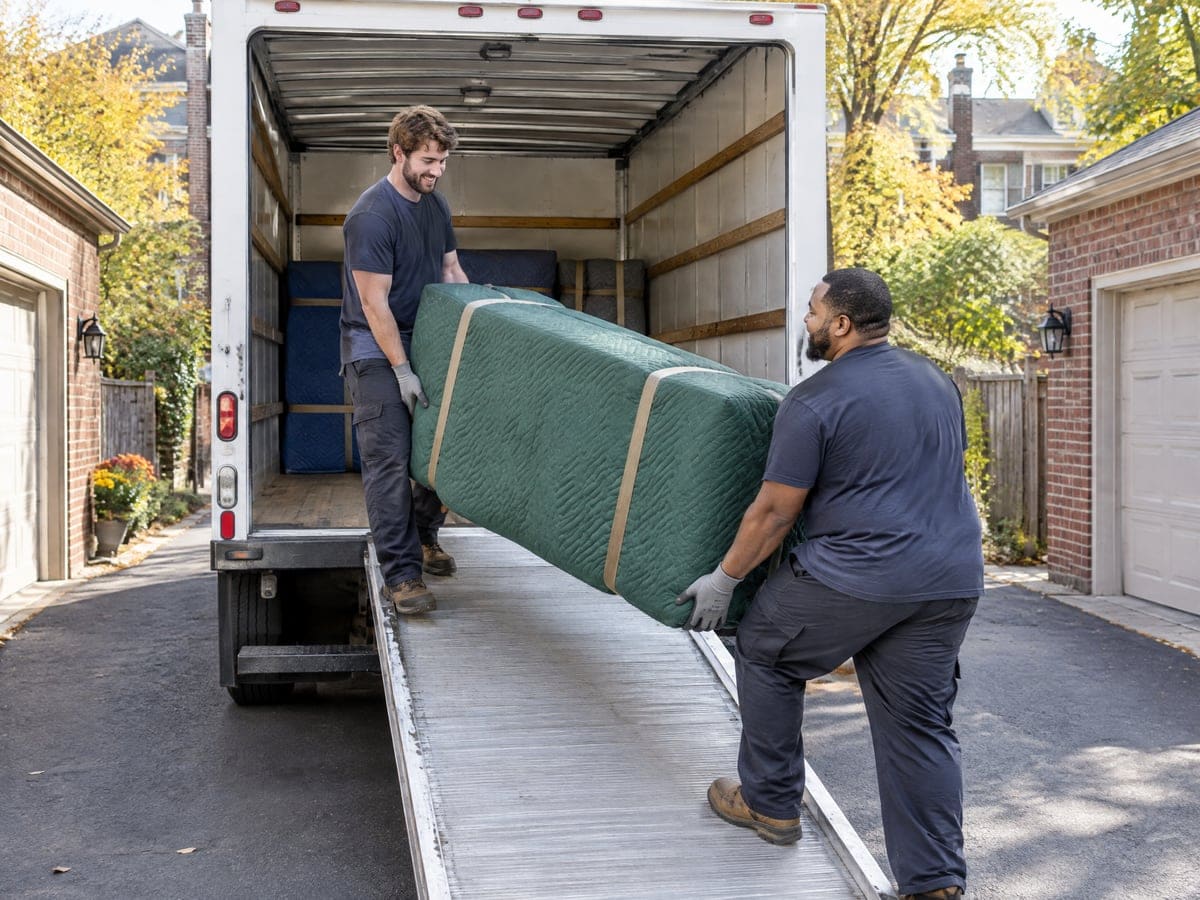
Furniture, mattresses, appliances, televisions and electronics, pianos, hot tubs, office furniture, construction debris, carpet, yard waste, and the contents of a basement, an attic or a garage. Single-piece jobs run from one couch down a back porch to a water heater out of a basement laundry room. Whole-home jobs include estate cleanouts, where keepsakes and papers come first and the family and the person handling the estate make the decisions together, and move-out cleanouts of a house or an apartment.
What does not go on the truck: paint, household chemicals, fuel, propane, solvents and batteries. These usually need special disposal. The City suggests drying latex paint before putting the can with the regular trash, and oil-based paints and spray cans go to the City's household chemicals facility on North Branch Street.1 Check the City's page for current hours before going.
How a call sets up
The first call covers the room and the way out. A short list of details is what to describe on the call:
- What has to go. A rough count of the big pieces, and anything heavy or awkward.
- Where it sits. Which floor, which room, whether anything is already in the hall or the garage.
- How it leaves. Stairs, back porch, service elevator, or through a ground-floor door.
- Where a truck can stop. An alley, a driveway, a loading dock, or a short run on a side street.
- The building's own rules. Ask the building owner or manager about elevator use and the service elevator window.
The job is looked at before any work starts, and nothing starts until you agree. If a call is harder today than a form, the callback form sits under the phone number and takes a name, a phone number and an optional note.
Chicago buildings and the carry out
Chicago has owners, co-owners, landlords and renters, and the building matters as much as the pile. About 57 percent of homes sit in buildings of one to four units.2 A back porch on a three-flat, an alley gate behind a bungalow, a service elevator in a mid-rise, a loading dock in a corner tower: each one changes the job, so mention the floor, the stairs and the way out when you call.
Housing age counts too: the median year built for Chicago housing is 1953.3 In an older two-flat or bungalow, saying so on the first call helps shape the picture: how many floors, how narrow the stairs, whether the landing has a tight turn.
City crews collect garbage from single-family homes and buildings of four units or less;4 larger buildings arrange private pickup. Apartment building owners must provide containers for all tenants and arrange private or licensed scavenger pickup.5
Where the load goes
- The City code defines junk as all articles discarded or no longer in use6 and requires a licensed junk peddler to take it to a City-permitted junk facility, recycling facility, transfer station, landfill or other permitted disposal facility, and to keep records proving proper disposal.6
- Ask any hauler where its loads go.
- Chicago bans dumping ashes, refuse or waste on any lot in the city except at permitted facilities,7 and the code names dumping without a permit a nuisance. The City's 311 system logged 15,402 fly dumping complaints in 2025.8
How to check a Chicago junk removal company
Chicago licenses junk haulers. The code defines a junk peddler as anyone who travels from place to place in the city, with or without a vehicle, to collect, transport or dispose of junk,6 which covers paid junk hauling, and separately licenses private scavengers who remove recyclables, construction and demolition debris and other wastes where the City does not, under the private scavenger section.9 The City also requires every licensed junk peddler to letter each side and the rear of every junk vehicle with the licensee's name, business phone and city junk peddler license number, in letters at least two inches high.6
How to check any hauler: ask for the City license number, and look at the truck lettering when it pulls up. Compare answers between two haulers; two companies asked the same questions tell you a lot.