How we size up a furniture removal job
You tell us what is going and where it sits. The job gets planned from those details, then confirmed by the crew with a walk-through at the door.
1. Which pieces go and which stay
You say which pieces are leaving. Tags, a sticky note, or the words "everything in this corner" all work. A piece going out gets looked at for size, weight and condition before any work starts.
2. The floor, the stairs and the elevator
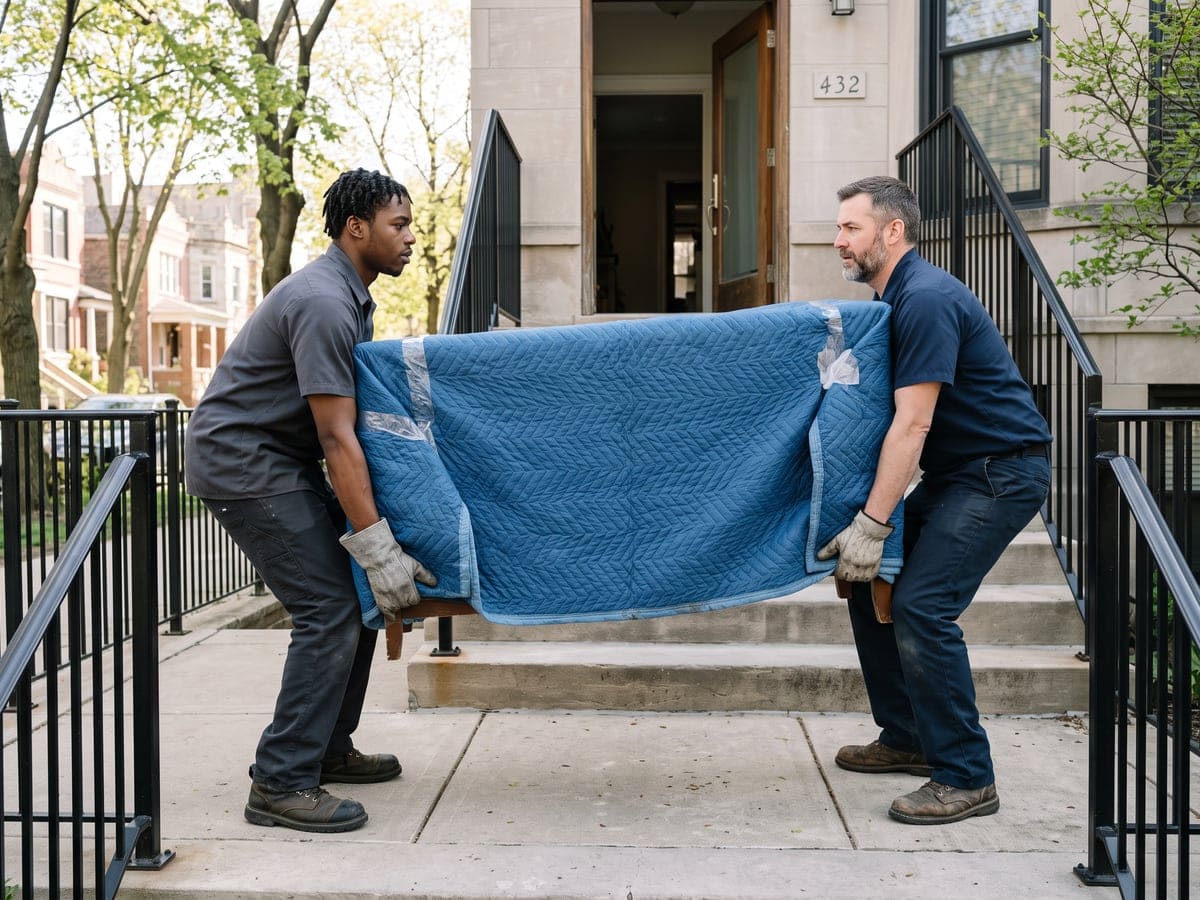
The crew looks at how your furniture gets to the truck. A ground floor with a straight shot to the alley is one job; a third-floor walk-up with a turn at every landing is another. If your building has a passenger or freight elevator, ask the building about elevator use before the day. The crew can carry down stairs when the elevator is not an option.
3. Doorways, landings and the turn at the top of the stairs
About 27 percent of Chicago's housing units sit in two-, three- and four-unit buildings.1 A couch that came in through a bay window during a renovation may not go out the front door the same way. The piece and the tightest point on the path both get measured.
4. Whether a piece comes apart
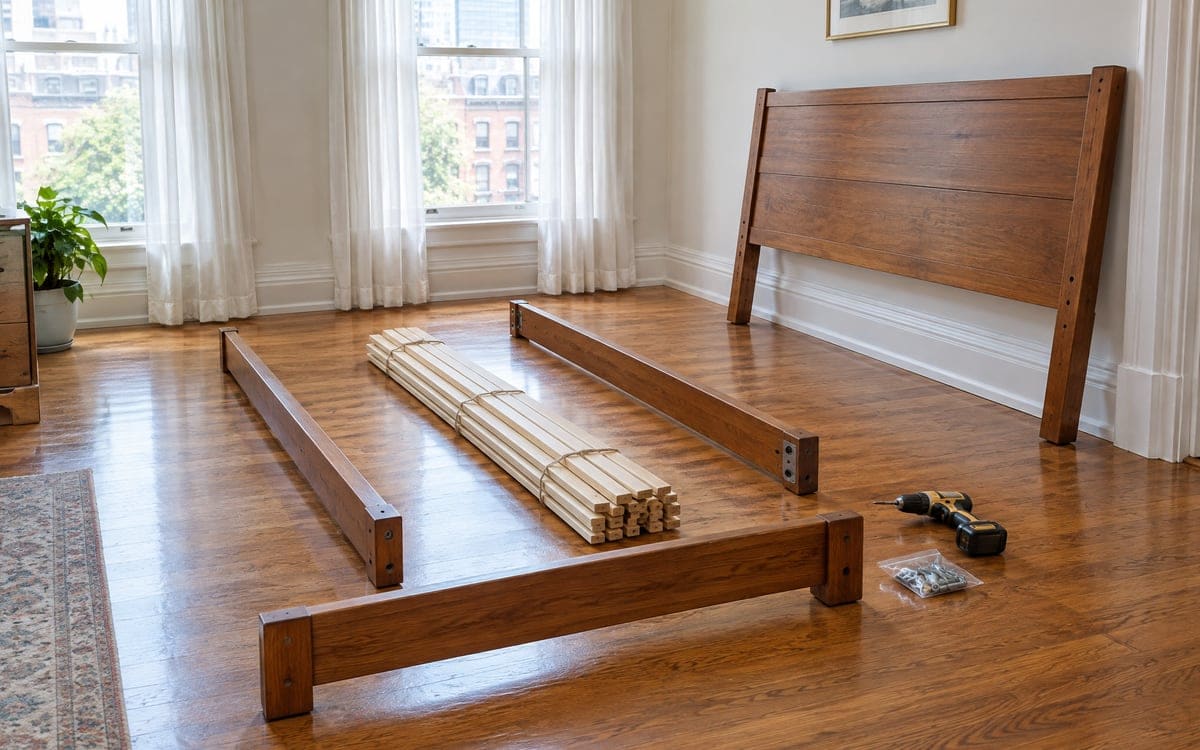
A lot of furniture is easier to carry in pieces. Bed frames break down to rails, slats and a headboard. Bunk beds separate at the posts. Sectionals split at their connectors, and most entertainment centers come apart in the right order.
5. Weight
A solid-wood armoire, a marble-top dresser, a glass china cabinet and a sleeper sofa all weigh more than they look. Weight matters on a staircase.
6. Condition: worth offering for reuse or not
A couch with pet damage, deep tears or a smell has little chance with any reuse group. A dresser with scratches and all its drawers may have another life somewhere. Reuse groups set their own rules; the plain criteria are the ones to go by.
| Item or situation | What the crew checks |
|---|---|
| Sectional sofa | Connectors, cushions off, path width at the tightest turn |
| Sleeper sofa or power recliner | Weight, pinch points in the mechanism |
| Dresser with drawers | Drawers emptied, bottom checked for rails |
| Bed frame and headboard | Hardware, slats, headboard mount |
| Dining table and chairs | Leg attachment, leaf storage |
| Desk or entertainment center | Shelves, backing, cable holes |
| Bookcase or shelving | Fixed-to-the-wall anchors, shelf pins |
If you also have an old mattress to come out or kitchen appliances that are leaving, those sit on their own pages but can ride on the same truck.
Couches, sofas and sectionals
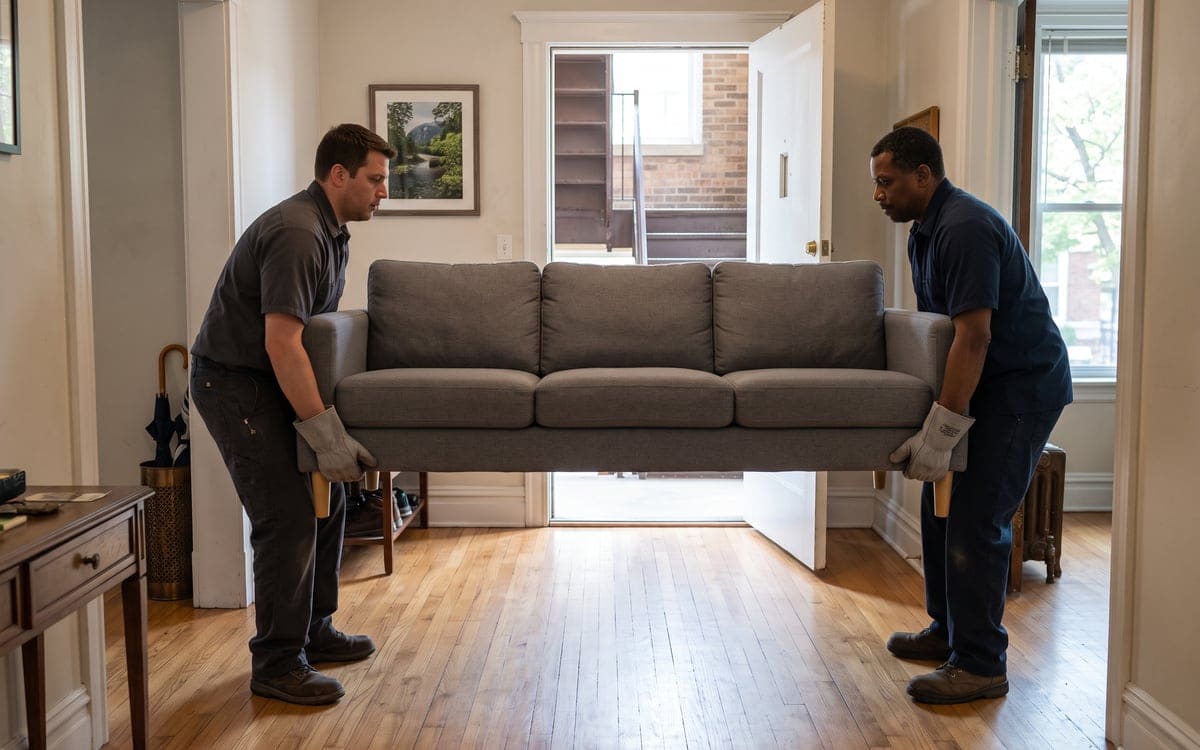
A couch, a sofa and a sectional each ask for their own look. Sectionals unhook at the connectors where the sections join. Sleeper sofas carry a steel frame and a folded mattress inside, which makes them much heavier than a plain sofa the same size. Power recliners add motors, long cables and pinch points at the hinges. Loveseats and futons are lighter but awkward on narrow stairs.
You keep your hands out of the mechanism of a sleeper or a power recliner, because closing those on a finger is how people get hurt.
When a piece can be reused
Reuse groups in Chicago take some used furniture when the condition is right. Each group sets its own rules.
- Clean upholstery with no tears, stains or smell
- Hardwood frames with all their hardware
- Dressers with every drawer, drawer slide and knob
- Dining sets with all their chairs
- Pieces that fit in a sedan or an SUV, as some groups ask
When a piece is done
- Pet damage, deep tears, cigarette smell or water damage
- Pressed-wood pieces that have come apart at a joint
- Mattresses or box springs
- Anything that has lived outside for a season
- A cracked or broken frame
The crew tells you on the walk-through which pieces look like they might find a second home and which will not. The donation guide covers what reuse groups generally accept. We never promise that a piece goes to any particular place. For the heavy end of these carries, why hauling furniture alone is a bad idea covers the risks a crew gets paid to take.
What this service covers
The crew carries furniture out of the room, down the stairs or through the elevator, and loads the truck. Taking a piece apart in the room when it will not fit through a doorway whole is part of the job too.
What to describe on the call
- Each big piece going out, with the room it sits in
- Floor number and whether a service elevator is available
- Front stairs, a back porch, or both
- A sectional or bed frame that will have to come apart in the room
- Anything heavy for its size: solid-wood armoires, marble tops, glass china cabinets, sleeper sofas
- A gate at the alley and whether the truck can pull up to it