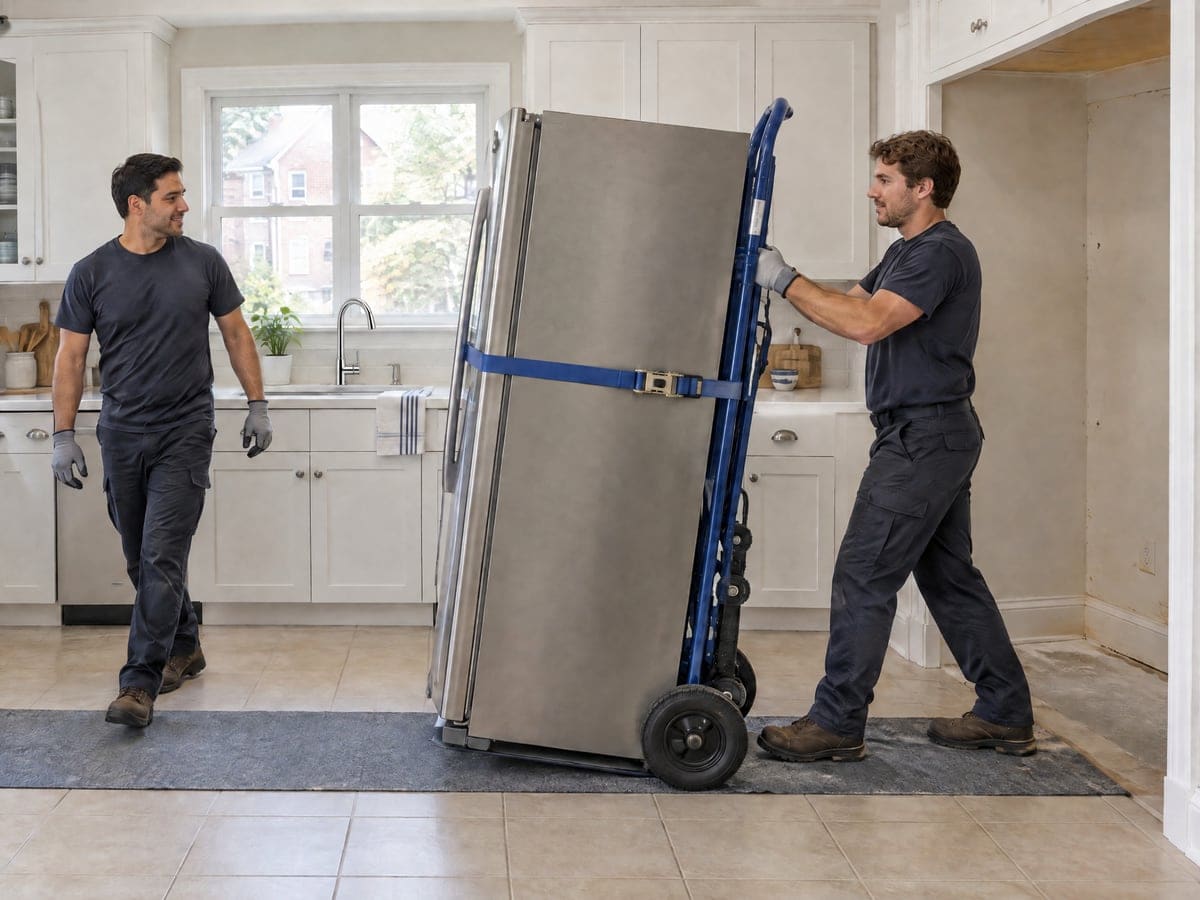
What is the appliance doing here?
The gas, water and power connections should already be dealt with by the right tradesperson before the crew arrives. The sections below cover what the crew looks at on the appliance and the route out.
1. What it is and whether it is still connected
Gas, water and power are disconnected by the right tradesperson before the crew arrives. A plumber shuts off and caps the water on a washer, a dishwasher or an ice line. An electrician handles a hardwired electric dryer or range. The gas company handles a gas line. The crew never disconnects a gas line and never cuts anything live.
2. Refrigerators and freezers
Food comes out of the refrigerator before the crew arrives, so the carry is lighter and the kitchen stays clean. The sealed system that holds the refrigerant usually stays sealed in the appliance. Under federal rules, the final person in the disposal chain is responsible for making sure the refrigerant is recovered1 before final disposal. That final disposer keeps a signed statement1 when an appliance arrives already emptied, and EPA does not accept a sticker as proof.
3. Basement laundry
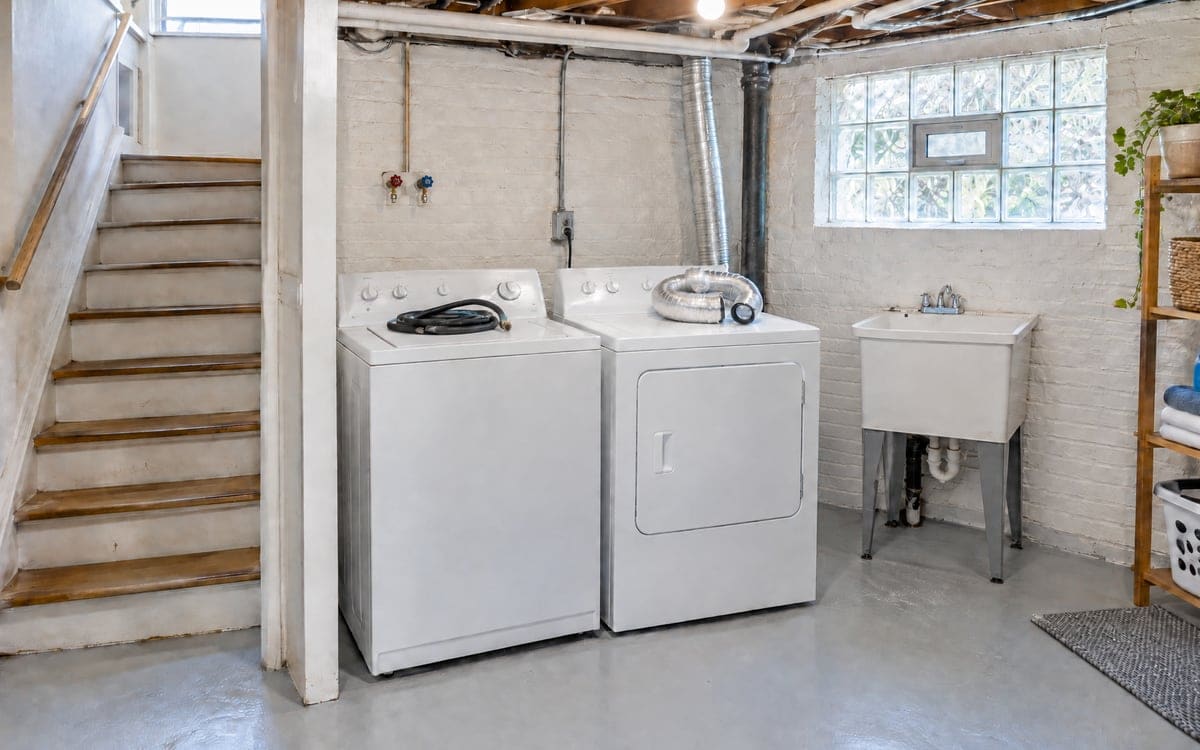
A washer and dryer pair in a basement adds a staircase to the carry. The crew looks at the stairs, the headroom above them and the turn at the bottom, and plans the carry around the pair of them. On the call, say which floor the laundry sits on and whether the stair run is one flight or two.
4. The path out
Once the appliance leaves the room it was in, the rest of the way depends on your floor plan. The width of each doorway along the route matters, and whether a side-by-side still has its handles on. Back porches, service doors and alley access each change the route. The crew looks at it all before anything leaves the kitchen.
5. Weight and keeping it upright
A refrigerator or chest freezer carries one way out: on its feet, doors held closed.
6. The doors
The City's sanitation page says to remove doors or lids from discarded refrigerators and freezers.2 The instruction is for the discarded unit, so a working appliance stays as it is until the crew is at the door.
| Item or situation | What the crew checks | What to say on the call |
|---|---|---|
| Refrigerator | Water line capped, power cord loose, handles on or off | Which floor, whether it is a side-by-side, French door or top-mount |
| Chest freezer | Empty, power cord loose, lid secured | Where in the basement or garage it sits, and the width of the way out |
| Washer | Water lines capped, drain hose free | Whether the washer is in the basement, a closet or a laundry room |
| Gas or electric dryer | Vent disconnected, gas line capped by the gas company or a plumber | Gas or electric, and whether the vent is loose |
| Range or stove | Gas or electric line disconnected, anti-tip bracket backed off | Gas, electric or induction, and whether the stove is freestanding or built in |
| Window air conditioner | Removed from the window, refrigerant sealed | What floor the window is on, and who is lifting it out |
| Dishwasher | Water, drain and power lines capped, cabinet screws out | Whether the dishwasher is already pulled from the cabinet |
A full kitchen coming out as part of a renovation is often a construction debris removal job as well, because the old cabinets and countertop are leaving at the same time. Appliances can be part of a house or apartment cleanout too, when they are yours to remove; renters should check with the landlord before anything is pulled.
A refrigerator on the hand truck, tilted back onto the wheels
Kept upright, never laid on its side or back. Doors strapped shut; the sealed refrigerant lines left sealed; the dolly tilted back onto the wheels.
When an appliance might be reused
- The unit is newer and still working
- No rust, no visible damage, no cords cut
- Doors seal, drum spins, burners light
- A model number and a note on recent service
When it is done
- A dead refrigerator, washer or dryer
- A unit that leaked and was left for weeks
- Anything with the power cord cut
- Window units with a damaged shell
Working appliances have a chance of a second life somewhere. We make no promise about a specific disposal site.
What the crew handles on the day
Carrying each appliance out and loading the truck are part of the job. A refrigerator keeps its doors closed on stairs. A window air conditioner comes out of the window before the carry starts, with the glass supported. On a stove with an anti-tip bracket, the bracket is backed off before the stove is pulled.
From the first call to the truck
- You call (312) 847-2454 and say what is going. We ask whether the gas, water and power are already dealt with, and who did that work.
- On the day, the crew looks at the appliance, the pathways, the stairs and the alley or curb.
- The crew carries the appliance out and loads the truck.
Chicago kitchens, basements and the alley
About 39 percent of Chicago's housing units were built in 1939 or earlier.3 The housing stock is older than the appliances inside it.
The City's household chemicals facility does not take appliances, air conditioners or refrigerants.4 TVs and computers have their own rules under the Illinois electronics trash ban, and an old freezer out in the detached garage can go with the rest of a garage cleanout.
A refrigerator left in the alley with the doors on is a bad idea. Chicago code bars dumping ashes, refuse or waste on any lot or parcel of real estate in the city except at a permitted facility, and declares such dumping a nuisance.5 The crew puts it in the truck instead.