What we take, and what we do not
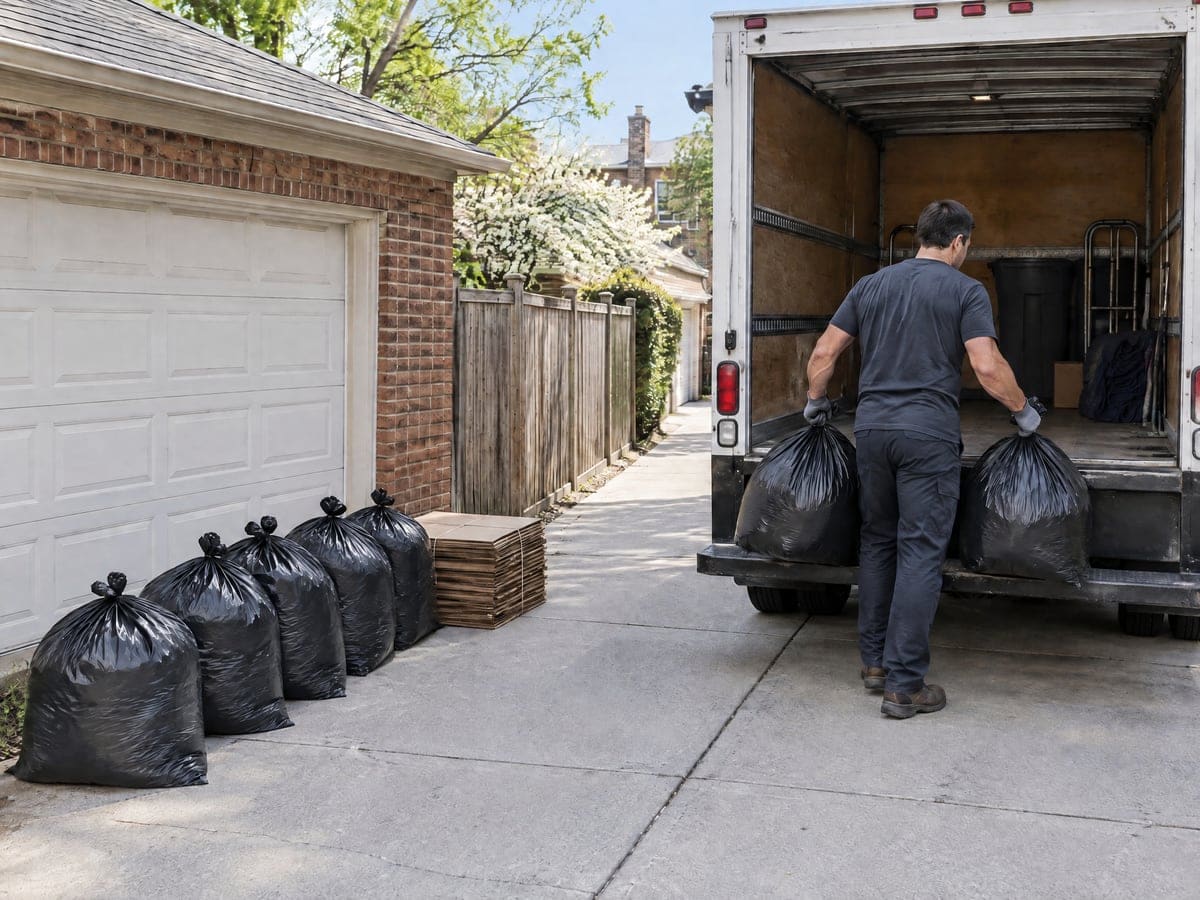
The crew hauls one-time loads of household trash: bags, boxes, loose items from a basement sort, broken furniture mixed with the bags, the bins that got pushed to the side during a cleanout. The weekly cart is not our job. The City collects garbage from about 600,000 households, single-family homes and apartment buildings of four units or less,1 with lidded 96-gallon carts the trucks lift automatically;2 other buildings arrange private collection, so a larger building has its hauler through the owner or manager.
What a trash crew takes, and what takes a different route
Everyday household bags and boxes ride on the truck; chemicals, electronics and latex paint each have their own route.
On the truck
- Tied bags of household trash and the boxes behind them.
- Loose items from a basement, a move or a party cleanup.
- Broken furniture mixed in with the bags.
A different route
- Oil-based paint, solvents, batteries and aerosol cans go to the City's household chemicals facility.
- Computers, monitors and TVs go to a registered recycler, since Illinois law bars them from the trash.
- Latex paint dries in the can with kitty litter or sawdust, then goes out with the trash.
Sources: City of Chicago Department of Environment, Household Chemicals and Computer Recycling Facility; City of Chicago Department of Streets and Sanitation, news release of December 6, 2011.
How we size up a one-time trash load
A trash load reads simpler than a furniture one, but there are still a few things the crew checks on arrival.
1. What is in the bags
Household trash is the straightforward part: paper, packaging, kitchen pulls, closet discards, the pile of mail that has to go to shredding first. We ask on the call what is in the bags, mostly to catch what is not supposed to be in a bag at all. Paint, household chemicals, fuel, propane, batteries and other household materials usually need special disposal; those stay for a City drop-off or a disposal service. The crew lets you know on the walk-through if a bag has one of these in it.
2. How much there is
Volume is a driver on a trash job. Thirty tied bags on the porch, three carts worth of boxes in the basement, a pickup bed of loose items in the garage: each one lands as a different quote. A count on the first call helps the crew plan.
3. Where it sits
A pile at the curb or in the alley is the simplest carry. A basement load adds stairs and a route through the house. A back porch means a trip up and down the back steps for each cart. The length of the carry is a driver too.
4. Recycling and blue carts
Chicago's blue cart recycling serves one-to-four unit buildings;3 in a larger building the owner or manager runs recycling. Clean, flat cardboard is often worth keeping for your own blue cart rather than putting it in a disposal load; the crew stacks and loads what is going.
5. Broken glass, nails and sharp things
Broken glass, nails, screws and other sharp things stay in a box or a doubled bag. No one picks through a pile with bare hands and you do not have to sort it. Mention broken glass on the first call so the crew knows what is in the pile.
6. Food waste
Food goes in tied bags, double-bagged if it has been sitting. If the smell is bad or there is a leak, say so on the call so the carry route avoids a long walk through the house.
| Item or situation | What the crew checks |
|---|---|
| Bags after a move | Count, where they sit, odor |
| Flattened boxes | Count, cleanliness, moving tape |
| A basement of bagged clutter | Stairs, lighting, mixed items |
| Loose items in the alley | What is loose, who put it there |
| Broken glass in a box | Box intact, taped, labeled |
| A party or event cleanup | Volume, access, what is on hand |
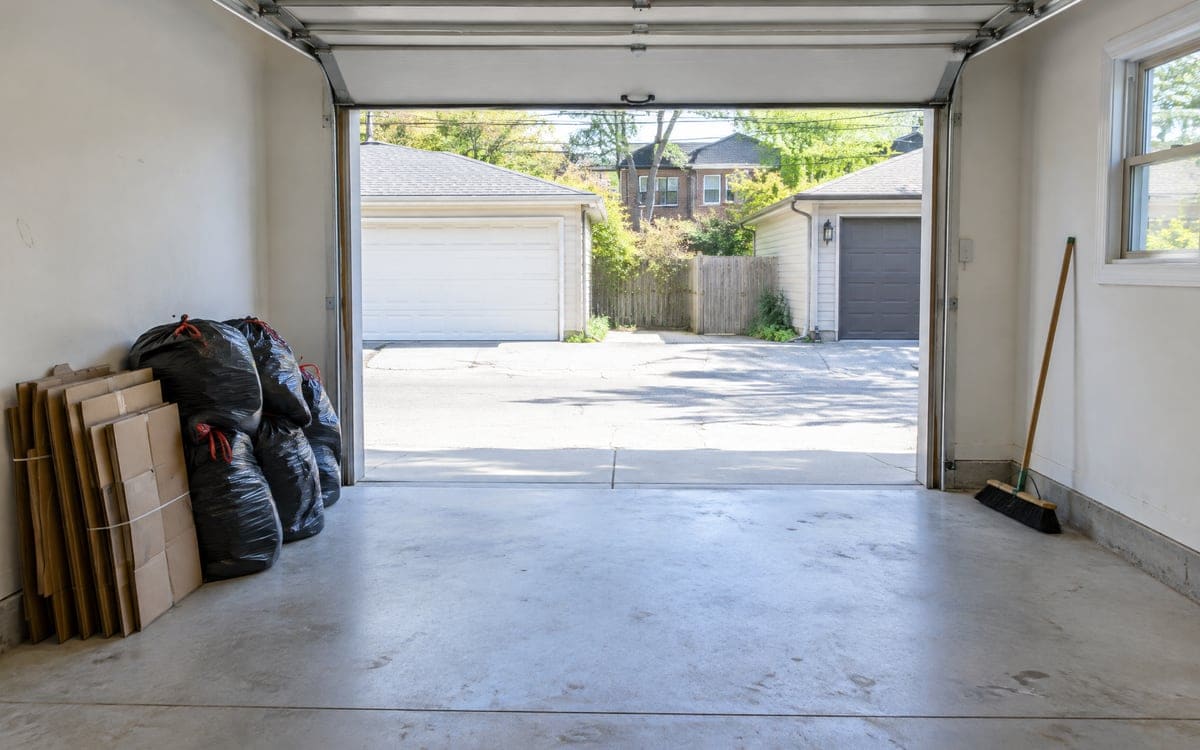
Related jobs: the full move-out that filled the garage, remodeling debris that is not household trash, a garage of old things stacked for years, branches and brush that came out at the same time, or a home that has filled up and needs the pile moved first.
What goes to reuse and what does not
Most of a trash load is disposal, with a small share worth setting apart.
Worth setting apart
- Clean, flat cardboard that could go in a blue cart
- A piece of furniture in a trash load that is still sound
- A boxed set of books, dishes or clothes still in good shape
- Clean paperback books and magazine runs the owner wants to offer locally
Mostly trash
- Mixed bags of mail, packaging and kitchen pulls
- Wet or torn cardboard
- Broken dishes, cracked lamps, worn-out small appliances
- Anything that has sat in a damp basement long enough to take on a smell
What this service covers
The crew carries bags and boxes from where they sit to the truck and loads it. Sorting the inside of a bag, scrubbing the floor and returning for a second load are not part of this work unless they are set up separately.
What to describe on the call
- A rough bag count: ten, twenty, fifty
- Boxes and whether they are flattened or still in use
- Where the pile sits: porch, garage, basement, alley
- Floor number and whether stairs run between the pile and the truck
- Anything heavy mixed in: a broken chair, a half-full bin of books
- Any sign of broken glass, nails or sharp items
- A smell or a leak, so the carry route avoids a long walk through the house
- Anything that should not be in a bag at all: paint, chemicals, batteries, propane, old televisions, computers or monitors