Volume is one driver
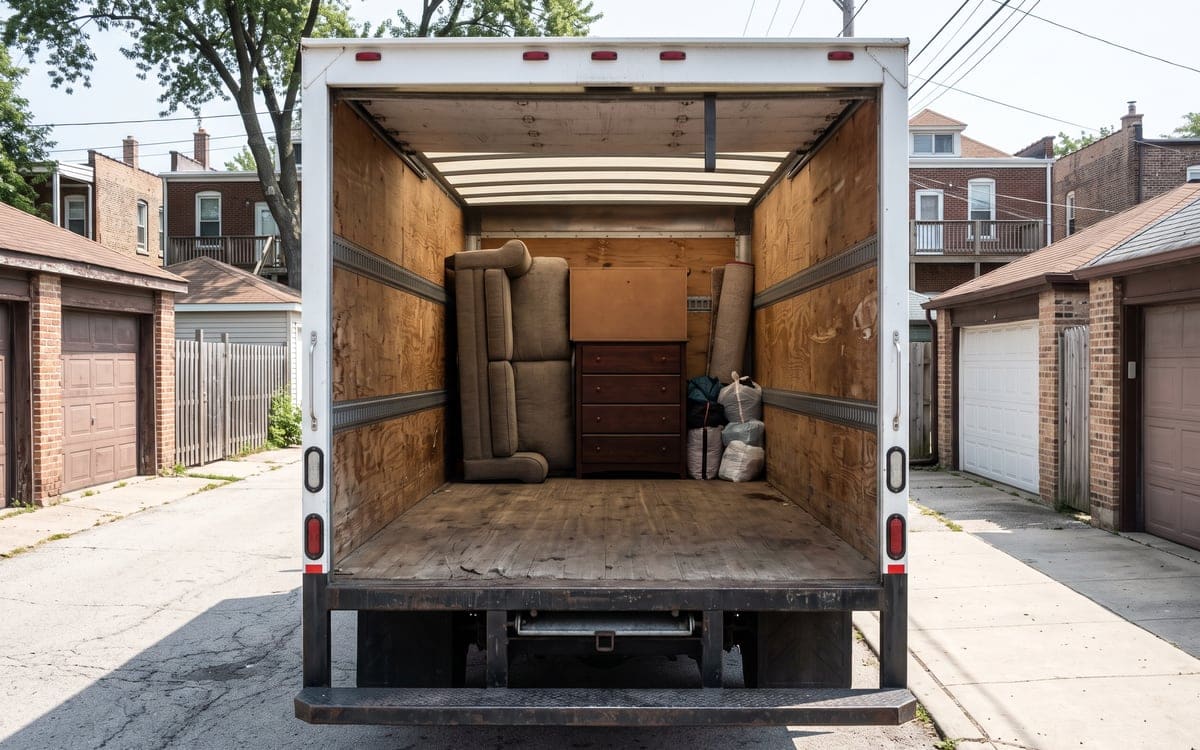
Most of what a crew does is move things from where they sit into the back of a truck. The truck has a set volume, usually measured in cubic yards. A single recliner is a small share. A few big pieces, carried out together, take up noticeably more. A garage full to the door, with bikes, patio furniture, lawn tools and a few boxes, can be a full truck on its own, and sometimes more.
Volume is also why counting items ahead of time helps. The crew does not need an exact list, but a rough tally of the big pieces, with the room each one sits in, lets us say up front whether one truck is enough.
Weight matters when the load is dense
Weight is another driver. Tile, grout, concrete, bricks, old plaster, roofing shingles, soil and sand are all heavy for their size. A truck can run out of weight before it runs out of space, so a dense load is not the same job as the same volume of lamp shades.

If a remodel left behind demolition debris, that side of the job goes under heavy remodel debris rather than general junk. For a long remodel where debris builds up by the day, pricing a dumpster against a crew is a question of its own.
Stairs, landings and long carries add labor
A couch coming down from a third-floor walk-up in a Chicago three-flat is more work than the same couch on a ground floor. Each landing is a reset, and a narrow turn at the top of the stairs matters. Three flights of back porch stairs over an alley are their own carry.
A service elevator helps when a building allows one. Ask the building before you call us, so we know what we have to work with. A long carry from the back of a yard to the alley works the same way: the crew is walking the same load back and forth.
Volume, weight and the carry out are the drivers to describe on the call.
Three things move a junk removal price
What drives a quote on a Chicago call: how much of the truck a load fills, how dense the load is, and what the carry out of the building takes.
How much of the truck fills up
Volume is the main lever on most jobs.
- One recliner takes up a small share; a garage packed to the door is a full truck.
- A rough count of the big pieces lets a crew say whether one truck is enough.
How dense the load is
Weight pushes in once the pile is heavy for its size.
- Tile, concrete, soil and roofing shingles can run a truck out of weight before it runs out of space.
- Say on the call if the pile has any of those.
What the carry takes
Stairs and long walks count as labor.
- A couch on the third floor of a walk-up adds flights of stairs and tight landing turns to the job.
- A service elevator shortens the carry when a building allows one.
Taking furniture apart adds labor to the carry
Bed frames come apart. Sectionals split at their connectors. Entertainment centers often need the shelves out before the box fits through a door. Taking a piece apart is labor the same as the carrying. If any hauler brings up a new charge for taking furniture apart after the look, that is a question worth asking out loud.
Taking a piece down to its parts also helps on the way out: a dresser is lighter without its drawers, a sofa with its legs off turns at a landing, and a bed frame broken down fits through a doorway.
A few items go a different route after they leave
Not everything a truck picks up goes to the same place after it leaves the curb. A refrigerator or a window air conditioner holds refrigerant, so it needs special handling at disposal. Mattresses, when it is time to send one on, are their own category: large, awkward and hard to compact. Electronics follow their own rules, so televisions and computers go a different route than a load of general junk.
Televisions, computers and monitors have been barred from Illinois trash since January 1, 2012, and must go to a registered recycler.1
Any of those is worth calling out on the first call.
What the on-site look covers
A short note of details on the call helps a hauler say roughly where a job falls. The crew has not seen the piece, the stairs, the doorway, the elevator or the alley from a description alone, so a look on arrival covers the pieces that were not clear on the call.
What garbage service the building has, before any crew is called
City crews collect garbage from single-family homes and apartment buildings of four units or less, about 600,000 households in all.2 Larger buildings arrange private collection; owners of apartment buildings must provide enough containers for all tenants and set up private or licensed scavenger pickup.3 Things that fit the building's own service do not need to go on a hauler's truck at all.
Chicago's old buildings change what a job takes
About 39 percent of homes in Chicago were built in 1939 or earlier,4 from a time before most of our furniture existed, and about 20 percent sit in buildings of 50 or more units.5 The bigger buildings bring their own puzzles: a service elevator the crew needs to use, a loading dock to find, sometimes a path from the apartment door that runs through hallways, a freight landing and a back lot. Ask the building about elevator use before the visit.
When you call, say which kind of building you live in and what the way out looks like.
A cheap price can end in a Chicago alley
Chicago's code bans dumping on any lot in the city except at a permitted facility and declares the dumping a nuisance,6 and the City's 311 system logged 15,402 fly dumping complaints in 2025.7 The fly dumping guide covers that side. Illinois EPA also warns that a waste generator can be held responsible for the garbage if it is illegally disposed, whether or not the generator contracted with the hauler who moved it.8
The City's rules require a licensed junk peddler to take junk to permitted facilities and keep records and receipts.9 It is reasonable to ask any hauler where the load goes before you say yes.
What to ask before you say yes
A short list of questions keeps the price honest. Who carries the pieces out, and are there added charges for stairs or elevators that the walk-through missed? How is weight handled if the load turns out to be denser than it looked? Where does the load go after it leaves the house? What happens if you add a piece once the crew is already there? Is the quote per truck, per volume used, or per the whole job?
More questions worth asking any hauler are on their own page.
Table: what moves the price
| What changes the price | Why | What to say on the call |
|---|---|---|
| How many pieces, and how big | Volume is one driver | A rough count of the big pieces, by room |
| How dense the load is | Weight is a driver when a load is dense | Say if there is tile, concrete, soil or shingles |
| Floor and stairs | Carrying up or down takes labor | Floor number, how many flights, any landings |
| Elevator or back porch | A service elevator helps if the building allows one | Whether there is a service elevator and whom to ask about using it |
| Taking pieces apart | Beds, sectionals, desks come apart | Say which pieces will not fit through a door whole |
| What is in the load | Fridges and TVs follow their own disposal rules | Call out any appliances, mattresses or electronics |
| Where the truck can park | A long carry adds work | Alley access, loading zone or driveway |