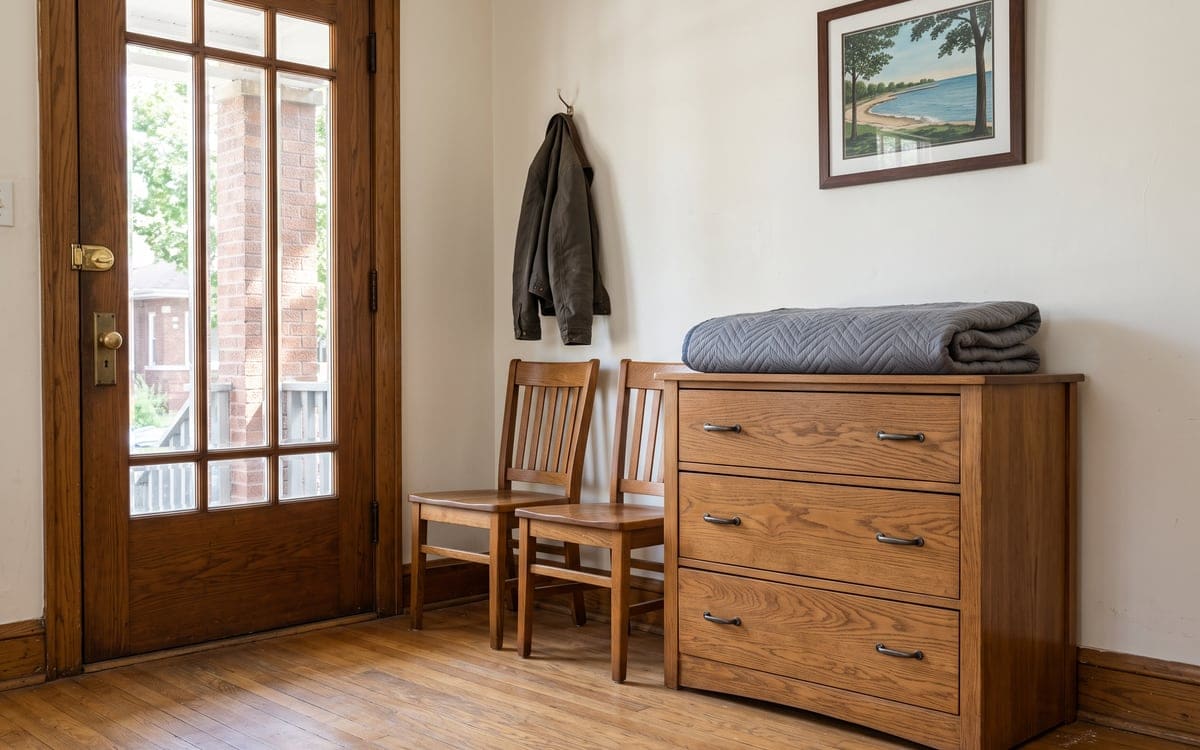
Condition decides more than the brand
Reuse groups have a storefront or a program to run, and nothing in that program is helped by a piece someone will not take home. A pine dresser that is clean, square and complete is useful. A hardwood dining table missing two chairs and one of its leaves is not, even if the maker's label is a name people recognize. The next household in line is the one setting the standard, and the group reads the piece through that lens.
A short test you can run from your own living room covers the usual sticking points: all drawers slide, nothing wobbles on an uneven floor, no deep scratches run across a working surface, cushions still hold their shape, and the piece smells like a house, not like a basement. Pieces that pass have a chance; pieces that fail have less, no matter how good the original was.
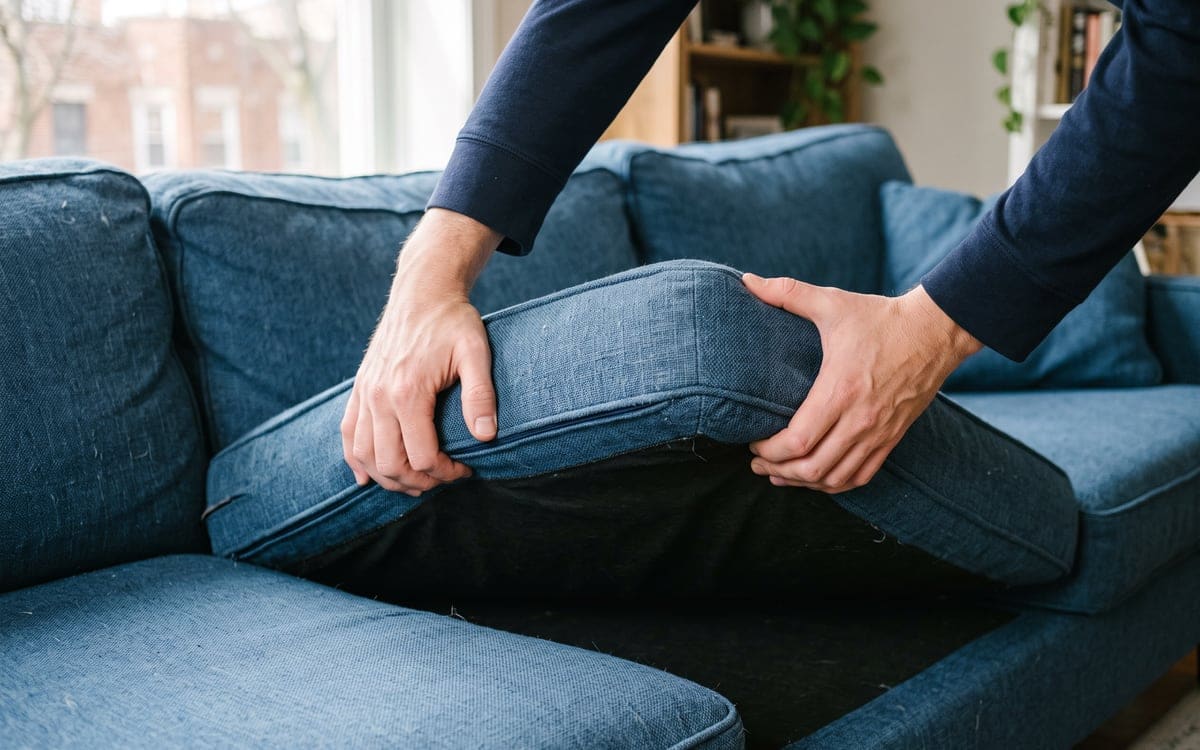
Upholstered pieces face the toughest test
Couches, loveseats, recliners and upholstered chairs are the hardest category. Fabric and foam hold smells and pet dander, and reuse groups set their own line on stains, tears and odor. Ask each group about its line before offering the piece, and expect to send a photo of each side of the couch.
Leather is read the same way. A scratch here and there is often fine; cracked armrests, torn cushions or peeling finish is often not. If the couch has lived with a cat that used it as a scratching post, it is likely a crew job.
Mattresses are their own question
Used mattresses sit on a separate line. Reuse groups set their own rules on used mattresses. What happens to a mattress after it leaves the home is its own page, with the general shape of what can and cannot be recycled.
Box springs follow the same rule, with the small exception that an unused box spring in its original wrapping sometimes finds a taker. Bed frames, which are not upholstered, often do find homes if the parts are all there and the bolts have been kept.
If a mattress has to leave the house, the choice is usually between a hauler and dropping it off yourself. For most households, the question is less about reuse and more about disposal. The mattress disposal page covers what happens to a mattress after it leaves the home in more detail, since each option looks different once you decide what the right next step is.
Each reuse group sets its own rules
The group that will take your dining set may not take any upholstered pieces at all; another may take an armoire from the same house but turn down the piano in the next room. The list each group keeps changes with the warehouse, the season, and whether a truck is going out that week.
The practical move is to ask before the piece leaves the room. A short email with photos and dimensions is usually enough to get an answer back. Trying to drop a piece at a loading dock without asking first is how good furniture ends up back in a crew's truck. For furniture or a couch nobody will take, a crew is the fallback.
What to send a donation group
Run the home test
All drawers slide, nothing wobbles, cushions hold their shape, no basement smell on the piece.
Take photos
Several angles so the group can see fabric, hardware and wear without having to come look.
Note the size
Width, depth and height, and whether the piece comes apart for the carry.
Email two or three groups
Each group's list sets what it will take; a short note moves faster than a drop-off.
Keep a plan B in mind
Take the first group that says yes; if none does, a crew is the fallback.
The City keeps a list of reuse partners
Chicago Recycles maintains a list of reuse partners on the City's own site. The list names several organizations that work in reuse1 across furniture, building materials, tools and school supplies. Not every partner takes every category.
Contact the group before bringing anything over. Each one sets its own hours, its own accepted-items list and its own policy on free pickup. The time between asking and getting an answer back varies by group.
Free pickup turns on two conditions
Free pickup is a real thing, and each group sets its own line. Ask each group whether it does free pickup at all, what condition the piece has to be in, and whether the group will carry a piece down a walk-up or out of a basement. The answers vary by group, so expect a short back-and-forth before anyone commits to a day.
For a piece on an upper floor, the practical questions are the same ones a crew would ask: how many flights, whether there is a service elevator, how wide the doorway is, and whether the piece fits the stairwell on its edge. Say all of this in the first email, with photos of the piece and the stairs.
Giving it away nearby works for some pieces
A few pieces move easily through the local word-of-mouth routes, and sometimes more easily than through any reuse group. A free solid wood dresser left on the back porch of a two-flat with a sign and a photo on a neighborhood page often finds a new owner. Dining tables, bookcases, desks, kitchen chairs and sturdy nightstands all do well this way, and so do oddball pieces that would never fit a thrift store's catalog but that fit one specific apartment perfectly.
A few cautions. Weather beats up anything left outside overnight, so the sooner someone picks it up the better. Pieces offered as free online bring strangers to your door, so pick a public step if that is a concern. A piece dragged out and then not taken is a piece that still needs to leave, which means the ask has only moved; a plan B helps.
When nobody will take it
Some pieces are at the end of the road, and no reuse group is going to accept them: a couch with pet damage down to the frame, a dresser with warped drawers, a kitchen table whose glue joints have given up, an office chair whose cushion is cored out. For those pieces, a move-out or a single pickup brings a crew with the right carry and the right truck.
Leaving it in the alley is dumping in Chicago
A tempting third option, and the wrong one, is to leave the piece in the alley or at the curb and hope someone takes it. Chicago's code bans dumping on any lot in the city except at a permitted facility and declares the dumping a nuisance.2
The alley answer has a second problem. Weather, dogs and curious passersby turn a usable piece into a wrecked one, sometimes within a few hours. A couch left out in the rain is a couch no reuse group will accept. Why the alley is not an option is on its own page.
Movement in Chicago shapes furniture decisions
About 30 percent of Chicago households moved into their current home in 2020 or later,3 and the share is higher among renters. Household churn is the backdrop to any question about a dining set from the old place or a couch that will not fit the new one.
A piece worth passing on is worth asking a reuse group about first, because the group that says yes saves the piece a trip to the truck, and the household swapping it out gets to feel good about where it went. For a home full of furniture left behind after a move or a loss, the sort is its own job. Sorting before a move is its own guide. Starting the sort before a scheduled move, rather than on the morning of, gives any reuse group enough notice to respond before the clock runs out.
Table: by piece
| Piece | Usually accepted when | Usually turned down when |
|---|---|---|
| Dresser | All drawers slide, no deep scratches on top | Warped drawers, missing pulls, water damage |
| Dining table | All chairs and leaves present, no cracks | Missing hardware, broken glue joints |
| Sofa or sectional | Clean, no stains, no odor, no tears | Pet damage, odor, torn upholstery, cushions compressed |
| Mattress | New in bag only, rarely used | Any used mattress, bedbug history, stains |
| Bookcase or shelving | Shelves straight, no missing pieces | Particleboard sagging or swelling |
| Office chair | Rolls, lifts, holds position | Torn seat, broken lift, cracked base |