What is left, and whose it is
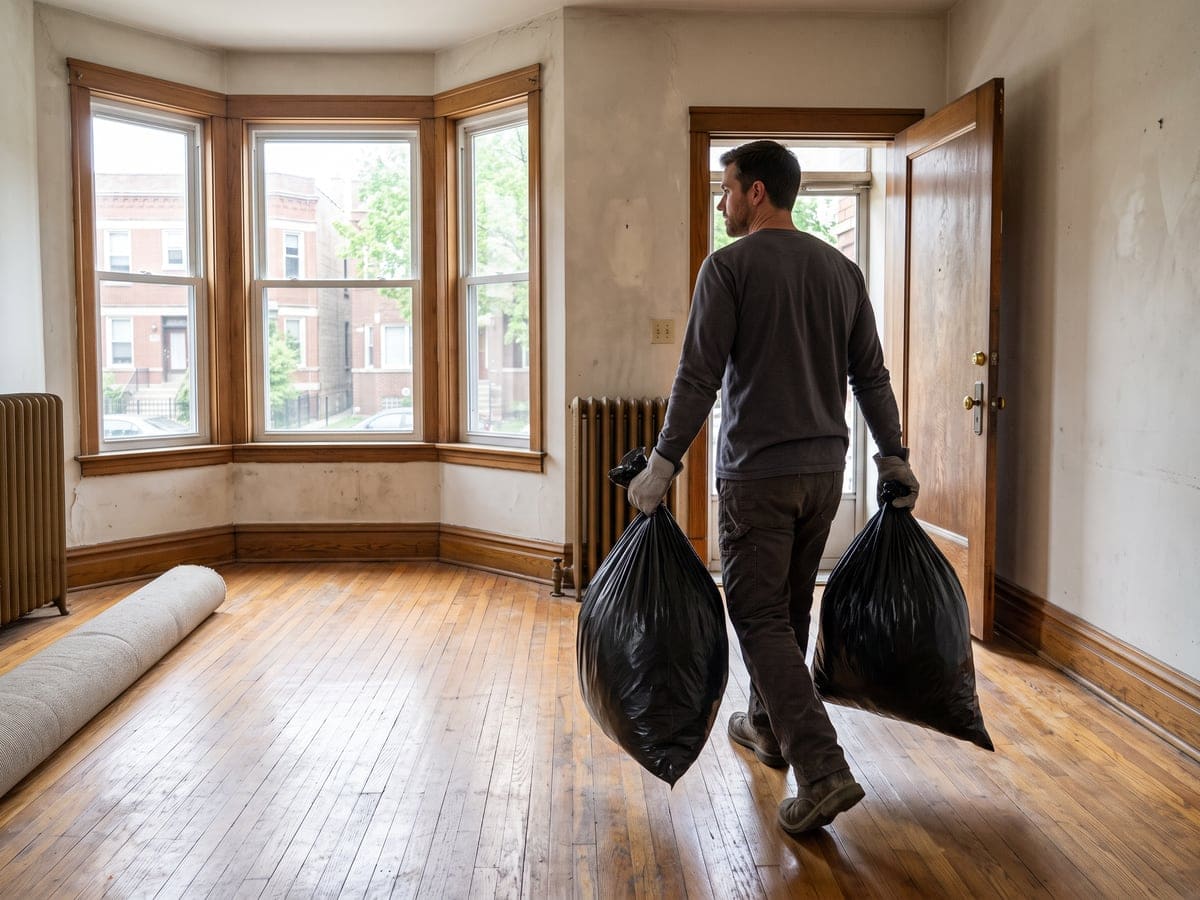
The crew works from a look at the door, and the first questions are about who owns what.
1. Whose things these are
For a move-out you did yourself, the answer is simple. For a unit a tenant left full, it is less so. A landlord clearing an abandoned unit should check with an attorney before anything goes, and the crew needs the owner's go-ahead to start. For a sale, the seller is the person to call. We do not give legal advice.
2. The unit
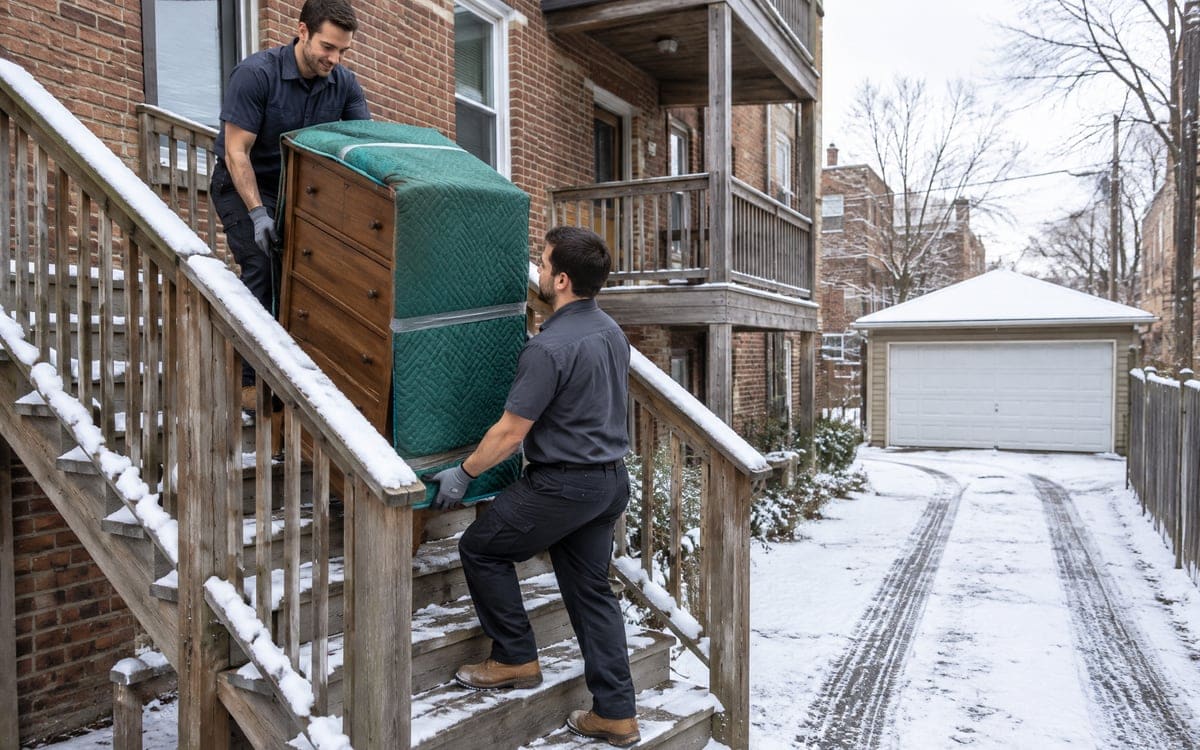
The crew asks about the floor, the stairs, the elevator and the way out. A top-floor walk-up in a three-flat is a different carry than a studio in an elevator building. A single-family house has its own front stairs, back porch and side door.
3. Storage beyond the unit
A unit may come with more than the four walls: a basement locker, a back porch, a shared garage, a parking space with a storage box in it. Tell us on the call where the keys are and what each space holds. The locker and the garage come out when the building allows.
4. Garbage in the building
How a building handles its everyday garbage matters on the day of a cleanout. The City collects garbage weekly from all single-family homes and apartment buildings of four units or less;1 larger buildings arrange private collection. For a condo or an apartment building, owners must provide containers and arrange a private or licensed scavenger pick-up.2 Ask the building what its own rules are before the day.
5. What can be reused
Furniture in good shape, usable appliances, kitchenware and books. The furniture donation pickup guide covers what reuse groups generally accept. Used mattresses almost always leave as mattress disposal.
| Item or situation | What the crew checks |
|---|---|
| Studio in an elevator building | Hallway width, way to the dock, building's own rules |
| Top-floor unit in a three-flat | Front stairs, back porch, landing turns |
| Whole single-family house | Rooms, basement, attic, garage, back porch |
| Unit left full after a tenant moved out | Owner's authorization, inventory in the unit |
| Foreclosure | Access, who holds keys, lender paperwork |
| Basement locker | Locker key, access rules, what is inside |
An old refrigerator or washer left behind means an extra carry. Where the day is mostly furniture rather than a whole unit, that page carries the fuller scope. A basement full of storage boxes and tools can go on its own visit. Clearing a home after a death is a different job and runs on a different plan. The mattresses are their own page too.
What finds a next home and what does not
Pieces worth passing on
- Sofas and chairs with clean upholstery, no tears, no pet damage.
- Dressers and tables with the hardware intact.
- Working kitchen appliances less than a few models back.
- Books, kitchenware and lamps.
Pieces that go as disposal
- Mattresses.
- Broken frames, water-damaged wood, missing legs.
- Rusted appliances, anything that no longer runs.
- Carpets, pillows and bedding.
- Loose piles of paper and old boxes.
Where the owner wants a reuse try, set those pieces aside before the crew comes and call the groups ahead of time. The crew never promises a reuse outcome.
What this service covers
Carrying furniture, bagged trash and loose boxes out of the unit, taking apart beds, tables and desks that will not fit through a doorway whole, carrying the locker, and loading the truck at the curb or in the alley.
What to describe on the call
- The address and the floor, and whether a service elevator is available
- The front stairs, a back porch, or both
- A basement locker, a shared garage or a parking-space storage box included in the clear
- Rough counts: couches, beds, dressers, chairs, boxes
- Any kitchen appliance being left in the unit
- Any mattress or box spring in the bedroom
- Any television, computer or monitor on its way out
- Access, keys, and who holds authority on the day