How we size up a yard waste load
1. What is in the pile
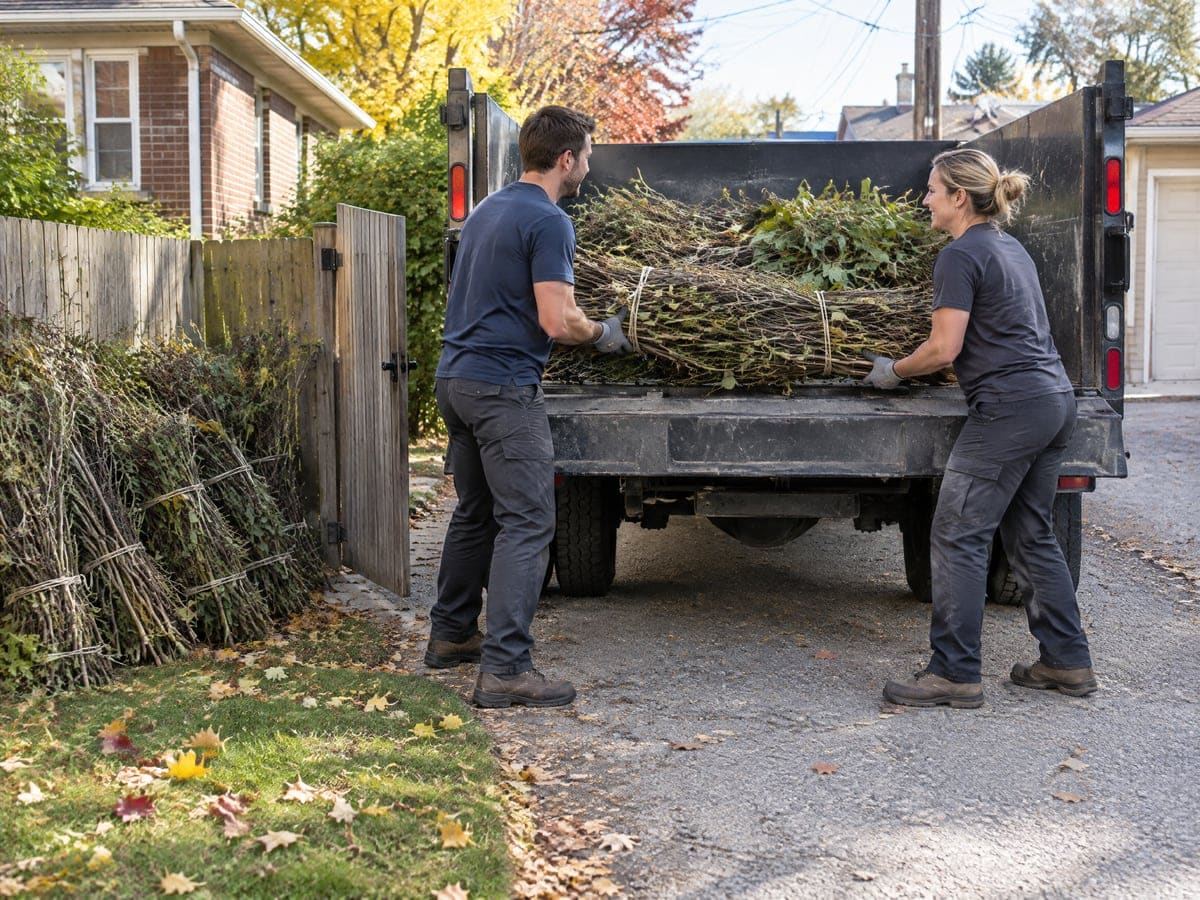
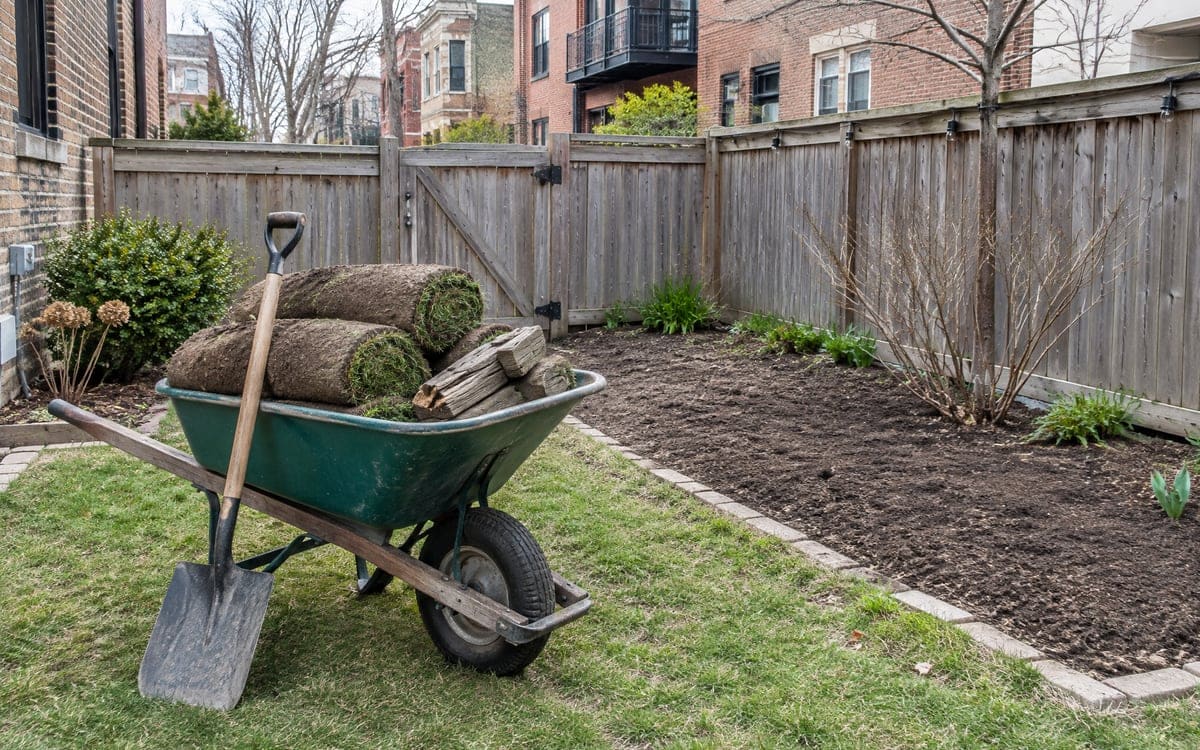
Branches, brush, bagged leaves, torn-out sod, loose soil, old landscape timbers, broken planters, pavers that lost their edge, old weathered patio furniture. Each has a different load behavior: branches ride high and loose, sod rides heavy and low, bagged leaves take up volume for little weight. The crew asks on the call what the mix is so the quote lines up with the pile.
2. Volume and weight
Branches and bagged leaves run on volume. Sod, soil and stone run on weight. A pickup bed of rolled sod can weigh as much as a pickup bed of lumber, which changes the trip count and the price.
3. Where the pile is
Back yard, side yard, gangway, alley. Alley access is the easiest load; a back yard behind a locked gate is a long carry. On a two-flat or three-flat the gangway can be narrow.
4. What stays
Stumps stay. Anything still growing stays. A tree the storm cracked but did not pull down is a tree service job before the hauling can start. If a stump is loose but still in the ground, we leave it; a stump out of the ground loads like a short log.
5. Bagged against loose
Leaves and smaller yard trimmings load simplest when they are already bagged. Loose leaves can go too, though you may want them bagged first; the carry is cleaner from a tied bag. Branches tie into bundles for the carry.
6. Fence line and plant beds
A pile along a fence line may hold weeds, the netting from a bean trellis, old plastic edging and plant tags. A plant bed being torn out leaves the mulch too; mulch rides with the leaves.
| Item or situation | What the crew checks |
|---|---|
| Bundled branches | Length, tying, nails or wire |
| Bagged leaves | Count, where they sit |
| Rolls of sod | Weight, dryness, pieces or whole |
| Old landscape timbers | Length, nails, rot |
| Broken planters and pavers | Weight, sharpness |
| A dead shrub already dug out | Root ball, soil on it, size |
Related jobs on a yard that is getting cleared: an old shed or playset coming down at the back of the lot, a backyard hot tub going out before the deck gets reclaimed, the garage on the alley full of the pots and old tools, a torn-out patio that is really construction debris, or bags of everything else from the house that got tied the same weekend.
What goes to a second life, and what does not
Occasionally worth setting apart
- Cedar landscape timbers in good shape, no rot, no bugs
- Clay or stone planters that are not cracked
- Pavers in a matched set with no spalling
- Metal garden edging that is not bent
What goes
- Branches, brush, leaves, sod, loose soil
- Rotted timbers, broken planters, chipped pavers
- Weed cloth, plant tags, old plastic edging
- Patio furniture past the point of a repair
We make no promise about where a load ends up; what to ask any hauler is in the guide to hiring a junk removal company.
What this service covers
Bagging loose leaves, bundling branches, carrying bags out of the back yard or down the gangway, and loading the truck. Cutting, trimming, digging, grinding and landscape work are not part of this work.
What to describe on the call
- Branches, brush, bagged leaves, loose leaves, sod, soil, timbers or pavers in the pile
- A rough volume: a few bags, a wheelbarrow's worth, a half-truck, more
- Where the pile sits: back yard, side yard, gangway, alley
- Gate at the alley, its width, and whether it is unlocked or needs a code
- A gangway width, especially on a two-flat or three-flat
- Anything the pile is leaning against: a fence, a shed wall, a gas meter
- Any wire overhead or along the lot line
When a limb is still in a tree, or on a wire
The crew will not approach a live-wire limb. Cutting a limb out of a tree is a tree service's work; the pile on the ground afterward is yard-waste work.
Illinois has kept yard waste out of landfills for decades
Illinois EPA says landscape waste has been banned from Illinois landfills since July 1, 1990,1 which is why a yard pile goes a different route from household trash. Illinois EPA names five options for landscape waste:1 leaving grass clippings and leaves on the lawn, mulching, a permitted compost facility, community collections, or a home compost bin.