How we size up an office furniture job
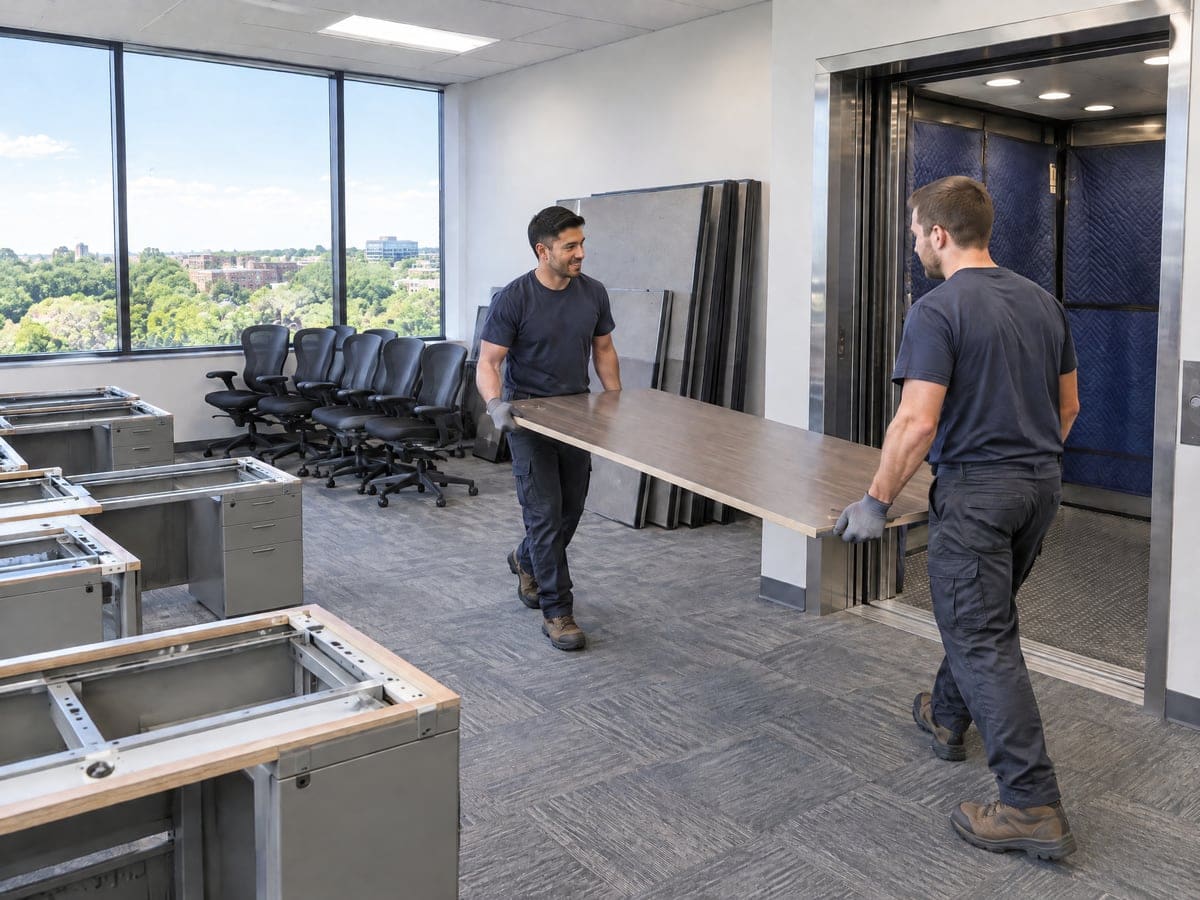
Our crew looks at the floor before anything is lifted, sorting the furniture into what is going, what is staying and what might get a second life somewhere else.
1. The building and what management asks of any vendor
Before the crew looks at a single desk, the building sets the limits. Ask management whether there is a freight elevator or whether everything goes through a passenger car at off-peak hours, whether the dock needs a reservation, what is required of any vendor coming in to move furniture out, and what move-out window is allowed. Those answers arrive before the day of the job, not during it.
2. What is going and what stays
A whole-floor cleanout and a quiet downsizing look nothing alike. The job covers executive desks, workstations, filing cabinets of two, four and five drawers, conference tables and credenzas, task chairs and side chairs. Monitors, printers and other electronics are grouped on their own, since Illinois rules keep electronics out of the trash. Any piece staying is noted too, so nothing moves by mistake.
3. Taking cubicles and large desks apart
Taking cubicles, executive desks and conference tables apart is part of the job. A six-foot cubicle panel on its own is light, but a run of them is awkward and the fabric scuffs easily on a doorway. Executive desks often sit on a steel frame that bolts together underneath. Conference table tops lift off a trestle base. Say on the first call roughly how many cubicles and how many desks are going, so the crew can plan.
4. Files, records and electronics
Filing cabinets go empty. If the files inside have to be kept, that is on the office to pack and move; shredding and records destruction are a different job, which is not ours. For electronics, Illinois has barred people from putting computers, monitors, TVs and many other electronics in regular trash since January 1, 2012,1 and landfills may not accept them. Monitors and other electronics get set aside because the ban keeps them out of a general load; a registered recycler is where they need to end up. Our electronics recycling guide covers what that means for an office in more detail.
5. Chemicals, cleaning supplies and old paint
Cleaning supplies, old paint from a tenant improvement, batteries, ballasts and toner cartridges are not on the truck on an office job. The City's household chemicals facility takes those materials from Chicago residents only, and tells businesses to use a private disposal company,2 so a business leaves them for a disposal company that handles commercial waste. Sharps and medical waste are their own category and are not ours either.
6. What might be reused
Office furniture is one of the categories where a used piece can go on to another office, as long as it is sound. The crew flags cubicle components, task chairs, filing cabinets and conference tables that look worth setting apart for a reuse try, and the office decides what to send and where. We never promise anything will land somewhere specific, because the receiving groups set their own rules and change them as space allows.
| Item or situation | What the crew checks | What to say on the call |
|---|---|---|
| Cubicle panels and worksurfaces | Hardware, fabric condition, matched sets | Rough cubicle count, and whether the sets match |
| Executive desk | Frame integrity, drawer units, tops | How many executive desks, and whether the tops are solid or veneer |
| Filing cabinets | Empty, lock works, drawers slide | How many cabinets, two-, four- or five-drawer, and whether they are empty |
| Conference table | Trestle base, top material, size | Rough size and whether the top comes off |
| Office chairs | Function, upholstery condition | Rough count of task chairs and side chairs |
| Printers and monitors | Age, cords, screen condition | How many printers and monitors are going |
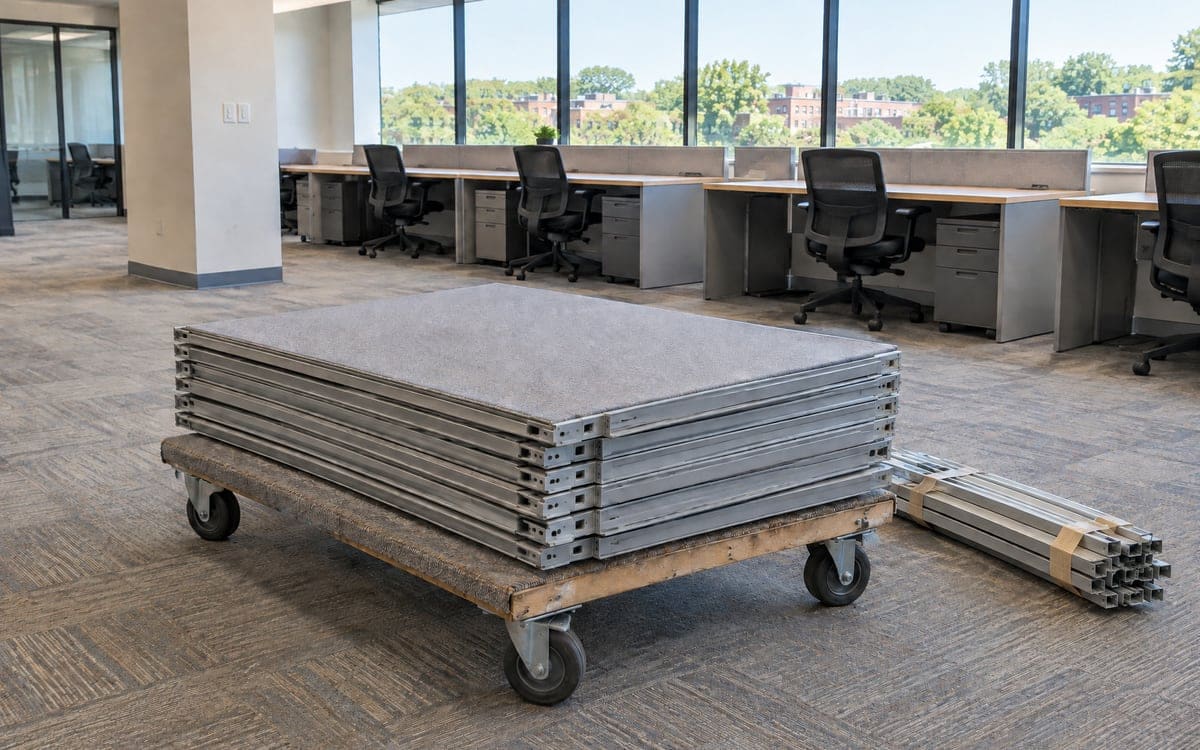
Related jobs on the same floor: the pile from a buildout or remodel, a load of boxes and bags left after the move, or monitors and old printers that need a drop-off.
What makes a piece worth offering for reuse
A chair that rolls and tilts without catching, a cabinet whose lock turns, a desk with all its drawer pulls, panels still in a matched run with the connectors: these can go somewhere. The common thread is condition and completeness.
Pieces worth offering
- Task chairs that function and are not torn or stained through
- Filing cabinets with working locks and all their keys
- Cubicle sets with matched panels and worksurfaces, no cuts
- Conference tables in one piece, no cracked tops or wobbling bases
- Lightly used lounge or side chairs, no tears, no smoke smell
What rules most pieces out
- Chairs with torn upholstery, missing arms or failed hydraulics
- Water-stained desks, delaminated tops, broken drawer slides
- Cubicle offcuts and scraps of fabric panel without connectors
- Anything with heavy adhesive residue, stickers or writing on it
- Pieces that smell of smoke or sat long in a damp basement
The crew makes the call at the door, and the office does not have to sort first. Pieces flagged for reuse are set aside for the office to offer; everything else goes in the main load. We make no promise about where a load ends up; what to ask any hauler is in the guide to hiring a junk removal company.
What our crew handles on a Chicago office job
Taking the pieces apart, carrying them out, running the freight elevator, keeping the hallway clear, and loading the truck.