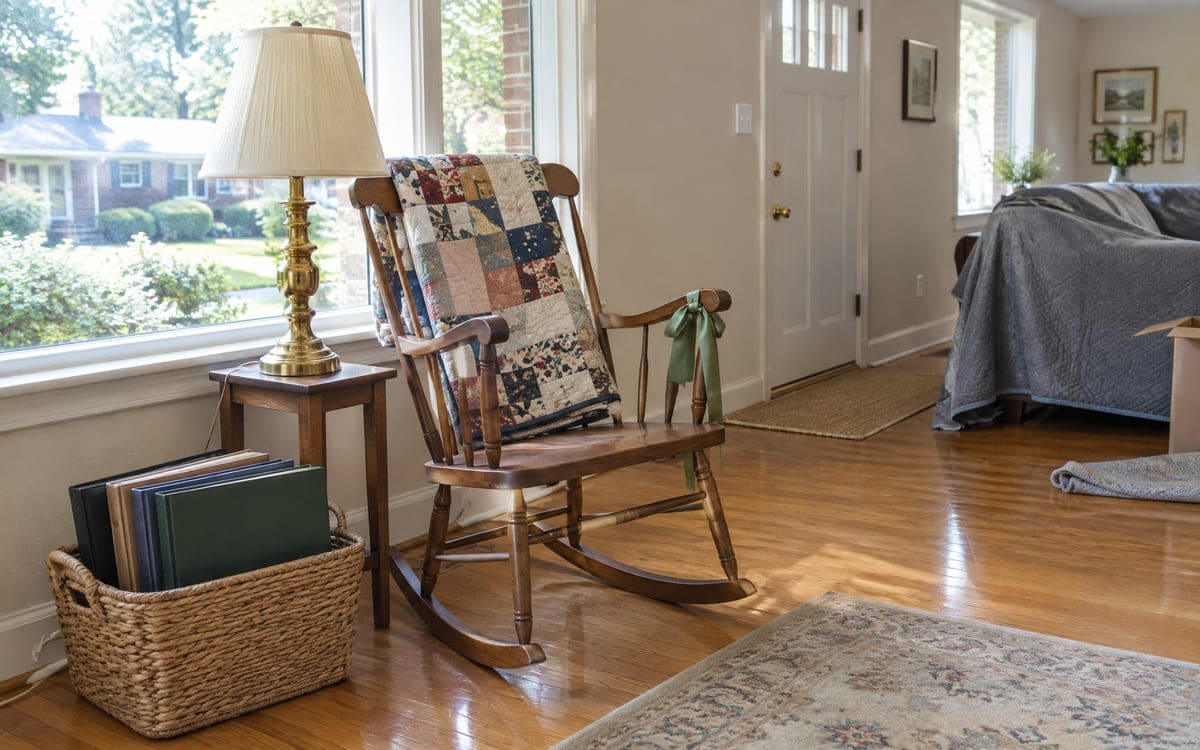
What is in the house, and who says what goes
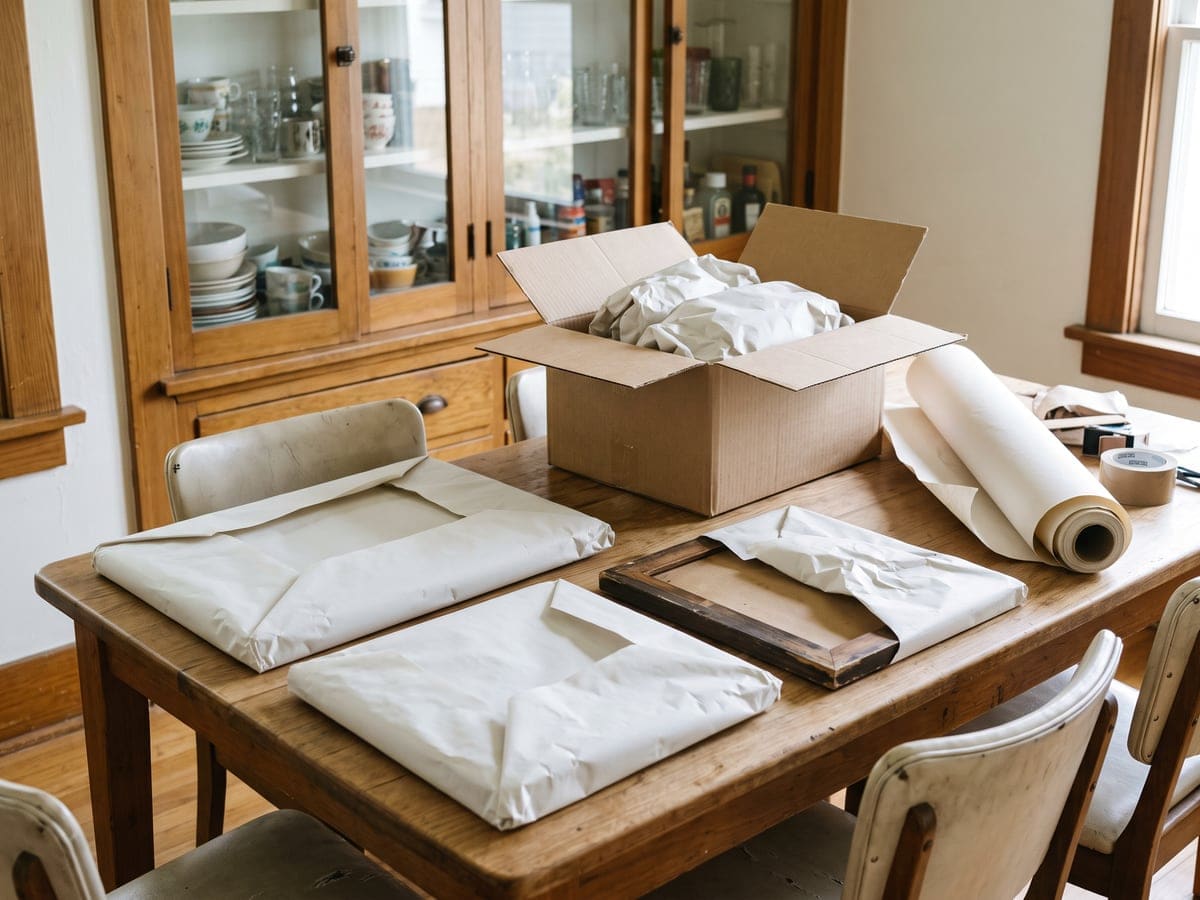
1. Who is in charge, and who decides
The crew needs one person giving the go-ahead on the day, usually the executor or whoever has authority over the estate. Spouses, siblings and grown children often sort together, but the yes has to come from the person with the authority. For anything legal, including who may authorize what, the family's attorney is the right call. We do not give legal advice.
2. What the family keeps, gathered first
Before the crew touches a room, the family brings what it wants to keep into one spot: a corner of the living room, a bedroom with the door closed, a few boxes in the dining room. A piece of painter's tape or a sticker on a chair, a lamp, a dresser or a china cabinet tells the crew the piece stays. When the family cannot be there, a short written list for the crew works too, with a photo of each piece if there is time.
3. Papers, photos, jewelry and anything that looks personal
Papers, photographs, jewelry and small valuables are set aside before the crew comes, or boxed in a room the crew does not enter. Tell the crew which rooms and which boxes to leave alone, and seal or mark the boxes so there is no question on the day.
4. The building
A single-family house with a basement and a detached garage is a different job than a one-bedroom condo in an elevator building. The crew asks about the floor, the stairs, the back porch, the basement locker, the garage on the alley, and who holds the keys to each. Ask the building or the condo association what it needs for a loaded elevator or a dock on the day, and tell us what the building has asked.
5. How much is there, room by room
Rooms count, not pieces: a full kitchen, a bedroom of furniture and clothes, a basement of boxes, a garage of yard tools. Full rooms carry a different load than half-empty ones. A whole house with a basement and a garage can be split into parts if that suits the family better.
6. What might find a next home
An heirloom dining set, a parent's hardwood dresser, a mantel clock that still runs, a china cabinet with the glass intact. No donation is promised, because reuse groups and furniture banks decide piece by piece. The furniture donation pickup guide walks through what reuse groups generally accept.
| Item or situation | What the crew checks |
|---|---|
| Whole single-family house with basement and garage | Rooms, basement, garage, back porch, alley access |
| One-bedroom apartment in an elevator building | Floor, hallway width, way to the dock, building's own rules |
| Condo with a storage locker | Unit, locker number, access the association sets |
| Items set aside for family | Labels, tape, written list |
| Papers and photos | Rooms and boxes to skip, closed-door rooms |
| Heirloom furniture in good shape | Wear, pet damage, structural condition |
Where a parent's furniture is the main part of the job, we handle it as a focused furniture visit. Where the basement and the garage hold most of what has to go, we plan the cleanout around those two spaces. An old piano is a job on its own: tell us on the call so we can plan the carry.
Pieces that find a next home or go
The sort usually comes down to the condition of each piece and whether it is something a reuse group will take.
Pieces that may still have a next home
- Heirloom hardwood dressers, dining tables and china cabinets with the hardware intact.
- A parent's sofa or armchair in good shape with no pet damage.
- A mantel clock, a wall clock, a cedar chest or a hope chest.
- Hand tools from the workshop that still turn.
- Family dishware and silverware kept together as a set.
Pieces that usually go as disposal
- Furniture with broken frames, water stains, missing legs or heavy pet damage.
- Mattresses.
- Rusted or non-working appliances.
- Chipped dishes, mismatched flatware, old pillows and bedding.
Where the family wants a reuse group tried, set the pieces aside before the crew comes and call the groups ahead of time. The kitchen appliances are their own page.
What this service covers
Carrying pieces out of the rooms, through the hallway, the back porch or the service elevator, taking apart what will not fit through a doorway whole, and loading the truck at the curb or in the alley. Food and household trash come out with everything else: do not take the bags out before we come.
What to describe on the call
- Whose home it is, who holds the authority, and who holds the keys
- Rooms the crew should not enter, with the doors closed if possible
- The home's shape: a single-family house, a two-flat or three-flat unit, a condo in an elevator building
- A basement, an attic, a back porch and a garage
- Rough counts by room: furniture, boxes, kitchenware
- Any kitchen appliance being left in the house
- Any mattress or box spring in the bedrooms
- Any television, computer or monitor on its way out
- Pieces the family wants to try with a reuse group