Permits in Chicago
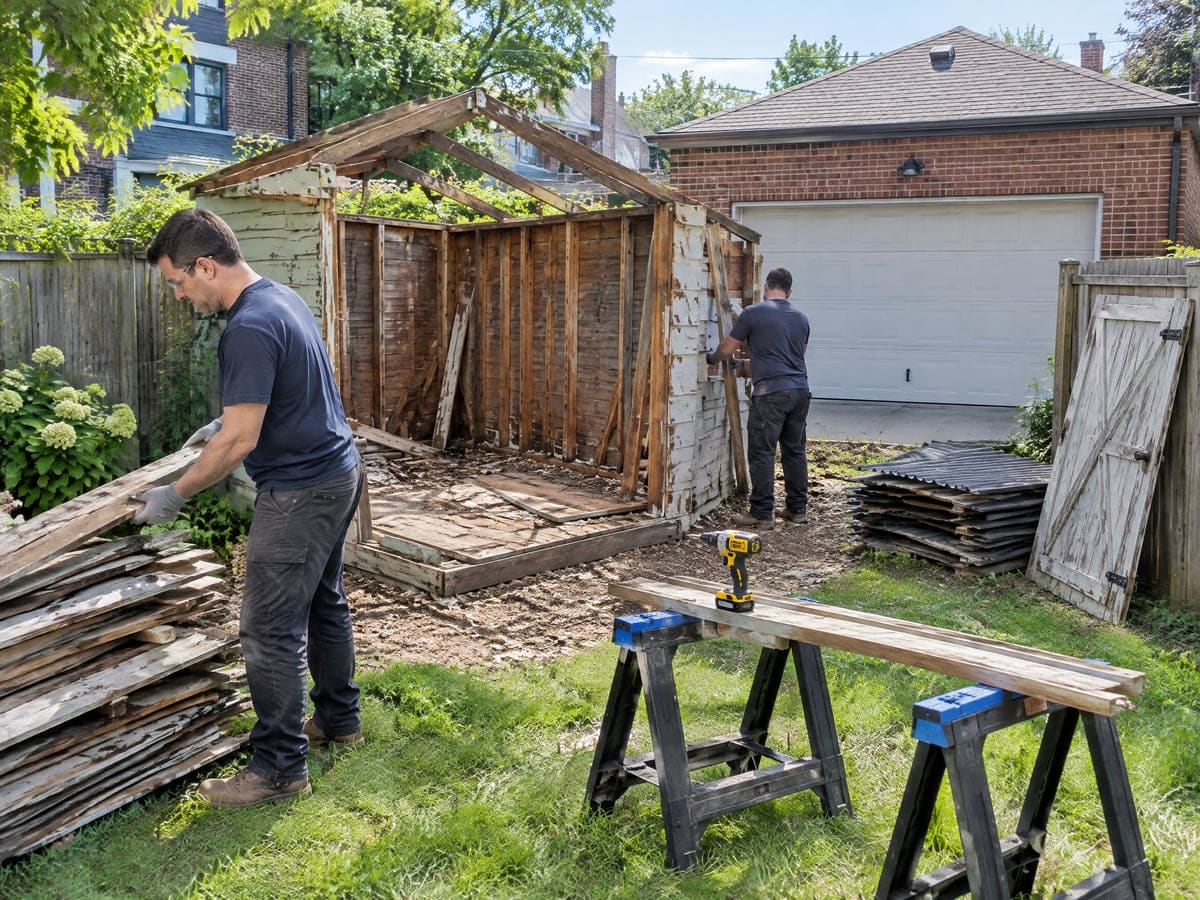
Taking a shed, deck or playset down may or may not need a City permit, and we are not the ones to tell you which. Check with the City of Chicago before any structure comes down.
How we size up a shed, deck or playset job
1. What it is made of, and how big
Wood sheds, metal sheds and resin sheds all come apart, and each one is a different kind of job. A deck adds beams, joists, decking boards and a railing to the pile; a ground-level deck is smaller work than a raised one, and both are a different job from a wooden playset with a tower and a slide.
2. Power or water to the shed
A shed with a light bulb, an outlet or a hose bib has to be made safe before anything comes apart. An electrician cuts the circuit at the panel; a plumber caps the hose line at the house. Nobody on the crew cuts a live wire or opens a water line. If the shed has a solar panel on the roof wired to a battery inside, the solar installer or an electrician handles that first.
3. What is inside
The inside of a shed is its own project. Rakes, old paint, dried-up gas cans, a broken push mower, bags of fertilizer, a bike that has not moved since the kids left for college. Paint, household chemicals, fuel, propane and solvents belong on their own disposal path and the crew does not take them. The rest comes out before the walls come down. A full-inside pull is closer to a garage cleanout.
4. What the shed sits on
A shed sits on skids, concrete blocks or a poured slab. The crew takes down the structure above; slabs, footings and poured concrete are not part of this work.
5. Decks attached to the house
A deck bolted to the house ledger is a bigger job than a free-standing one. Pulling a ledger leaves holes in the siding or the rim joist; patching, siding work and repairs to anything behind the deck are not part of this work.
6. Playsets and anchors
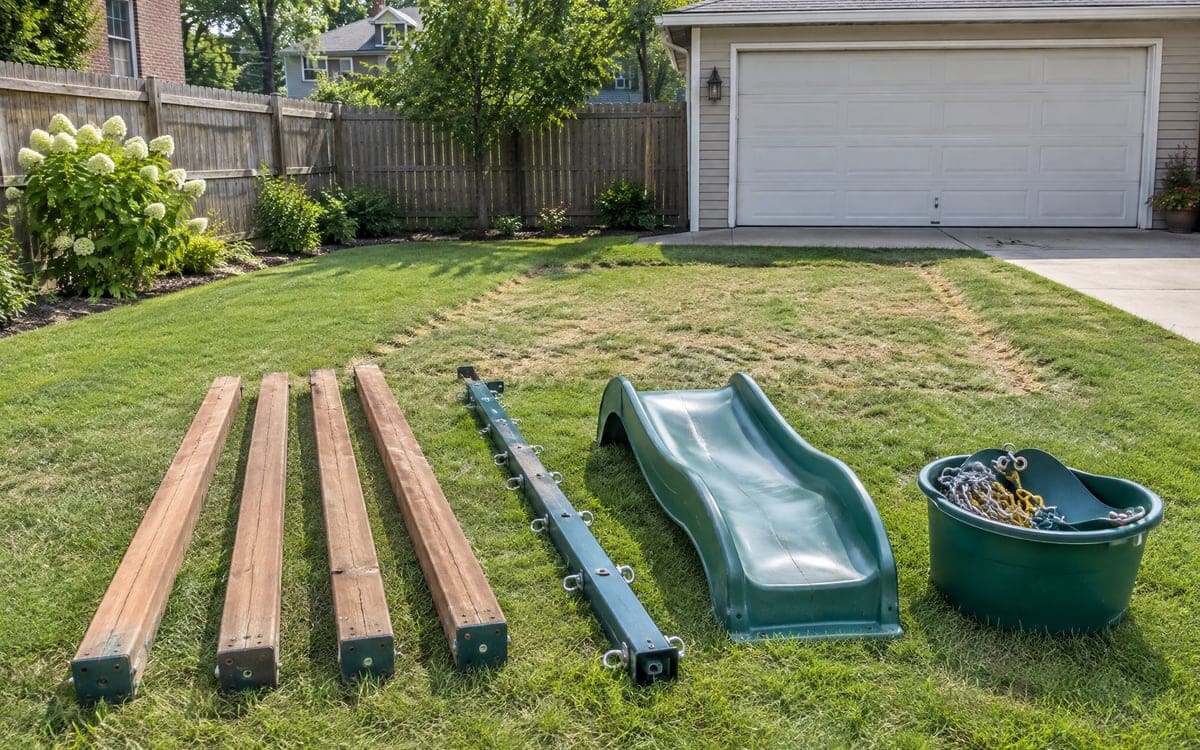
A wooden playset has beams, decking, a slide and a swing bar. Metal playsets have a top rail that bolts together. Both often sit on anchors poured into the ground.
| Item or situation | What the crew checks |
|---|---|
| Small wood shed on blocks | Door, roof, walls, blocks |
| Metal shed | Fasteners, sheet edges, roof rib |
| Resin shed | Snap joints, roof panels |
| Ground-level deck | Decking fasteners, joist span |
| Deck attached to the house | Ledger bolts, railing, posts |
| Wooden playset | Beams, slide, anchors, swing bar |
Related jobs: a hot tub on the deck going out before the deck comes off, the brush around it that has grown into the walls, or other demolition debris from a bigger project the shed is part of.
What a piece has to be to go to reuse, and what rules most of it out
Rarely worth setting apart
- A resin shed in one piece, no cracked panels, that someone wants to move whole
- Deck boards still in good shape, no rot, no deep screws
- A playset in one piece, no cracked beams, that another family wants and can move
What goes
- Most shed walls, roof panels, floors and framing
- Deck boards with rot, cup or heavy weathering
- Playset beams with cracked joints, torn slides, bent swing bars
- Any wood with carpenter ant or wasp damage
- Fasteners, nails and brackets
The crew flags the rare piece worth saving at the door. We make no promise about where a load ends up; what to ask any hauler is in the guide to hiring a junk removal company.
What this service covers
The crew takes the structure apart, pulls nails and screws, boxes or tapes sharp edges, carries pieces through the yard or down the gangway, and loads the truck. Slabs, footings, siding, repairs to the house and work on the yard behind the structure are not part of this work.
What to describe on the call
- Wood, metal or resin, and the rough footprint (an 8-by-10 shed, a 10-by-12, a 12-by-16)
- A free-standing shed or one attached to the house or garage
- A deck's height off the ground and whether it is bolted to a house ledger
- A playset's beams, slide, swing bar and anchors
- Power, water or a solar panel on the structure, and who disconnected it
- What is inside: tools, old paint and chemicals, bikes, bags of fertilizer
- A slab, blocks or skids under the floor
- Alley access and gangway width
What has to be safe first
Power disconnected at the panel by an electrician. A water line to a hose bib capped at the house by a plumber. A solar panel's battery handled by the solar installer or an electrician. Paint, propane, fuel and household chemicals set aside for their own disposal path; the crew does not take any of them. A pile of old lumber hides nails, splinters and sometimes pressure-treated wood.