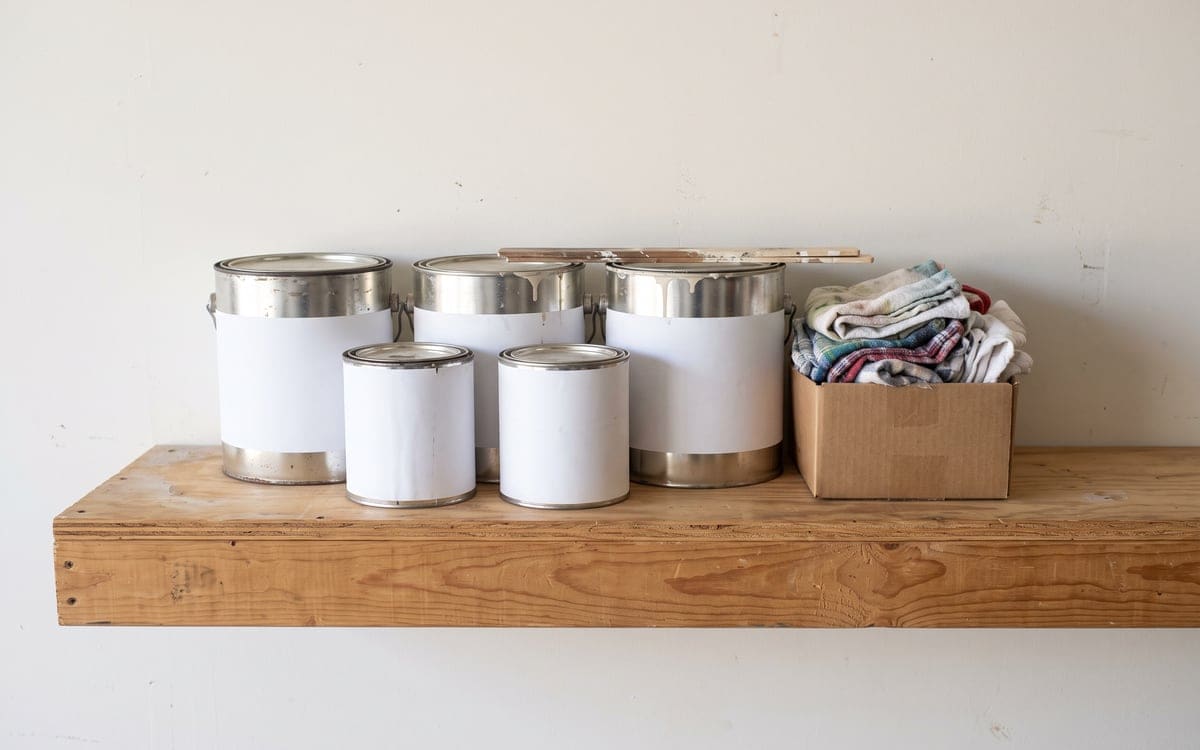
Latex and oil-based paint
Look at the can before anything else. If the label says the paint cleans up with soap and water, it is latex; if it says it cleans up with mineral spirits or paint thinner, it is oil-based.
Latex paint, dried out, is garbage. The City does not collect it separately, and a reuse group has nothing to do with a can that has lost volume. Dried latex goes out with the household trash. Oil-based paint is a household chemical that stays on the hazardous side of the line, and the City runs a facility that takes it in household amounts.
Latex and oil-based paint take different routes
Latex dries up in the can and goes out with the trash. Oil-based paint and solvents go to the City's household chemicals facility.
Latex paint
Water-cleanup label, dried out, goes in the trash.
- The City says to add kitty litter, shredded paper or sawdust to the can.
- Let it dry; put the absorbent material and the can out with the household trash.
- The chemicals facility does not accept latex paint.
Oil-based paint and solvents
Mineral-spirits cleanup, goes to the City's facility.
- Oil-based paints, aerosols, thinners, stains and strippers all go there.
- Lids tight, cans upright in the car on the way over.
- Residents only; businesses use a private disposal company.
Source: City of Chicago Department of Environment, Household Chemicals and Computer Recycling Facility.
The City's facility takes oil-based paint and solvents
Chicago's Household Chemicals and Computer Recycling Facility takes household chemicals, oil-based paints, aerosol paints and paint thinners, solvents, CFL bulbs, batteries, aerosol cans and mercury items1 from residents.
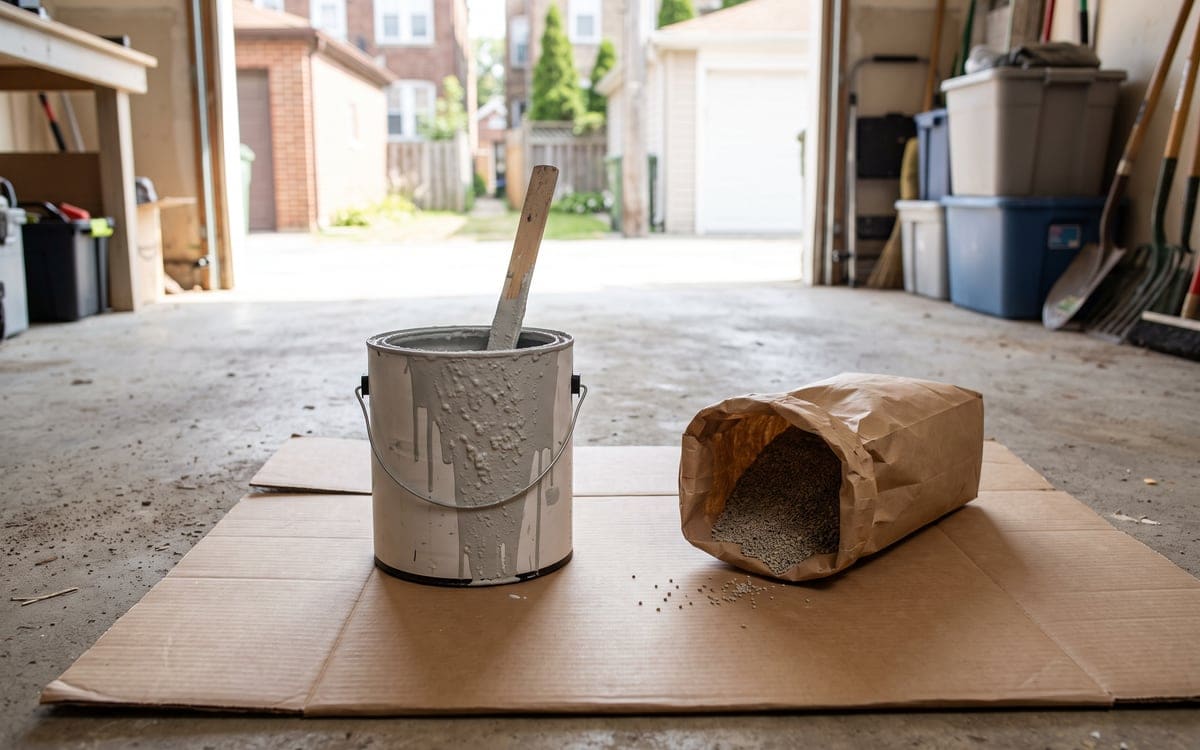
The site also takes mineral spirits, stains, paint strippers, preservatives and sealers, so a shelf cleared out from an old painting project usually fits in a single carload. Carry each can upright and keep lids tight on the way over.
Latex paint goes out dried
Latex is not accepted at the chemical facility. Dry it up by adding kitty litter, shredded paper or sawdust to absorb the remaining paint in the can, or pour it into a bag; after it dries, throw the bag or absorbent material and paint can away,1 the City says on its facility page.
A small amount at the bottom of a can dries on its own in a ventilated space. A gallon mostly full needs the kitty litter approach, or two, since the paint and the absorbent material together take more volume than the paint alone.
Latex you want to keep for touch-ups holds better in a smaller container with less air in it. A pint jar with the paint color and the room written on the lid saves most of what you need next year, and sends the rest of the gallon through the drying process this year. For the rest of the bags and boxes a project leaves behind, see our trash removal page.
A note on timing. A gallon can with three inches of paint at the bottom, open to the air in a dry basement, will set up on its own if nobody rushes it. The absorbent-material approach is for cans that need to be dry before the trash day they are going out on, or for anyone who does not want an open can of paint sitting in a utility room while it waits.
The facility is for residents, not businesses
All Chicagoans are welcome to drop off their individual household chemicals and electronics at the facility; businesses and large groups must work with a private disposal company,1 the City says on its facility page.
If you run a painting business or any shop, the facility is not the answer for your waste. If you hire a junk removal crew, that crew is a business, so it cannot drop your paint at the City facility on your behalf. Household paint is a load the resident drops themselves, or dries and throws out themselves. A remodel's leftovers often include paint cans on the shelf; those cans need to be handled before the crew comes for the drywall and the rolls of carpet.
Spray cans and thinners count as chemicals
Aerosols are on the facility's accepted list, which includes spray paint and hair spray among others. A pressurized can is not a trash-can item even when it feels empty; pressure can be left in a can that no longer sprays, and the can is handled as a chemical container until it has been accepted by the facility.
Paint thinner, mineral spirits, lacquer thinner and the strippers and sealers that come with painting are all accepted. Keep each in its original container with the lid tight. Oil-soaked rags in a loose pile are a known fire risk; keep them in a sealed metal container, and check the City's page for how to handle them.
A few things the facility will not take
The facility's not-accepted list is long and worth reading before you drive over. Business waste, alkaline batteries, explosives and ammunition, latex paint, acrylic and water-based paints, smoke and carbon monoxide detectors, cement and concrete, household appliances, medical waste, HVAC equipment, radioactive materials, refrigerants, air conditioners, tires, large copy machines and pharmaceuticals1 are all off the facility's accepted list.
Several of those are on separate rules. Electronics have their own route; electronics, which the same facility takes in a different category, are a related topic. Appliances go through an appliance crew. Items like pharmaceuticals and smoke detectors have other routes; check each one before you drive over.
A junk crew leaves paint behind
A crew showing up for a general cleanout cannot take paint, chemicals, fuel or propane. That is one of the questions worth asking up front: what is on the leave-behind list. Most of what is on that list is what the City's chemical facility takes, which is why the two topics live together.
Paint handling comes before the crew comes. Dry the latex, carry the oil-based to the drop-off, and the crew can look at the rest of the garage. If any hauler offers to take your paint, ask where it is going; a hauler using a private disposal company is doing what the City tells businesses to do, and worth hearing out.
The drop-off site in Chicago, by address
Chicago's household chemicals facility sits at 1150 N. North Branch Street, two blocks east of the Kennedy Expressway at Division Street.1
Hours are set by the City and vary. Check the City's own page before you load the car, and expect the schedule to shift from the one on an older bookmark. A full load that misses the open window has to come back home with you.
Check before you drive over
Three things keep a drop-off to a single run rather than two. First, read the accepted list and the not-accepted list; take only what matches. Second, confirm the hours on the City's page the day of the trip. Third, pack the car with each can upright in the trunk or cargo area, lids tight, padded enough that nothing tips in a hard stop. What is safe to carry yourself is on its own page.
All Chicagoans are welcome to drop off their individual household chemicals and electronics at the facility; businesses and large groups must work with a private disposal company,1 the City says. A junk crew is a business, so the crew's truck is not a route to the same facility.
For a long remodel that pulled a lot of paint off the shelf before any painting began, sort the cans by type on the way in. Latex pulled aside to dry at home. Oil-based and solvents stacked together, labeled if the lid is unclear. Spray cans grouped with the aerosols. Sorting by type makes the drop-off simpler than carrying a mixed pile.
Older cans without clear labels are the hardest group. A can from the 1990s may not say latex or oil-based on it anywhere, and some older paints had different formulations than what is on a hardware store shelf today. If the label is gone and the paint has been in the garage for a decade, treat it as oil-based and bring it to the chemical facility. The cost of guessing wrong on an old can and sending it out with the trash is bigger than the cost of a trip to the facility.
A single trip can also clear the other paint-adjacent cans on the shelf. The City's facility takes household chemicals, oil-based paints, aerosol paints and paint thinners, solvents, CFL bulbs, batteries, aerosol cans and mercury items.1 Read the accepted list first.
Table: by what you have
| What you have | Where it goes | What to do first |
|---|---|---|
| Full gallon of latex paint | Trash, dried | Mix with kitty litter, shredded paper or sawdust until dry |
| Half can of oil-based paint | City chemical facility | Lid tight, upright in the car |
| Empty latex can, dry | Trash | Make sure the paint inside has fully dried |
| Full spray paint can | City chemical facility | Treat as pressurized; do not puncture |
| Mineral spirits or thinner | City chemical facility | Original container, lid tight |
| Oil-soaked rags | Check the City's page | Sealed metal container; fire risk otherwise |
| Latex paint from a business | Private disposal company | Facility does not accept business waste |
| Smoke detector | Not the facility | Check for its own route before you drive |