The difference is who does the lifting
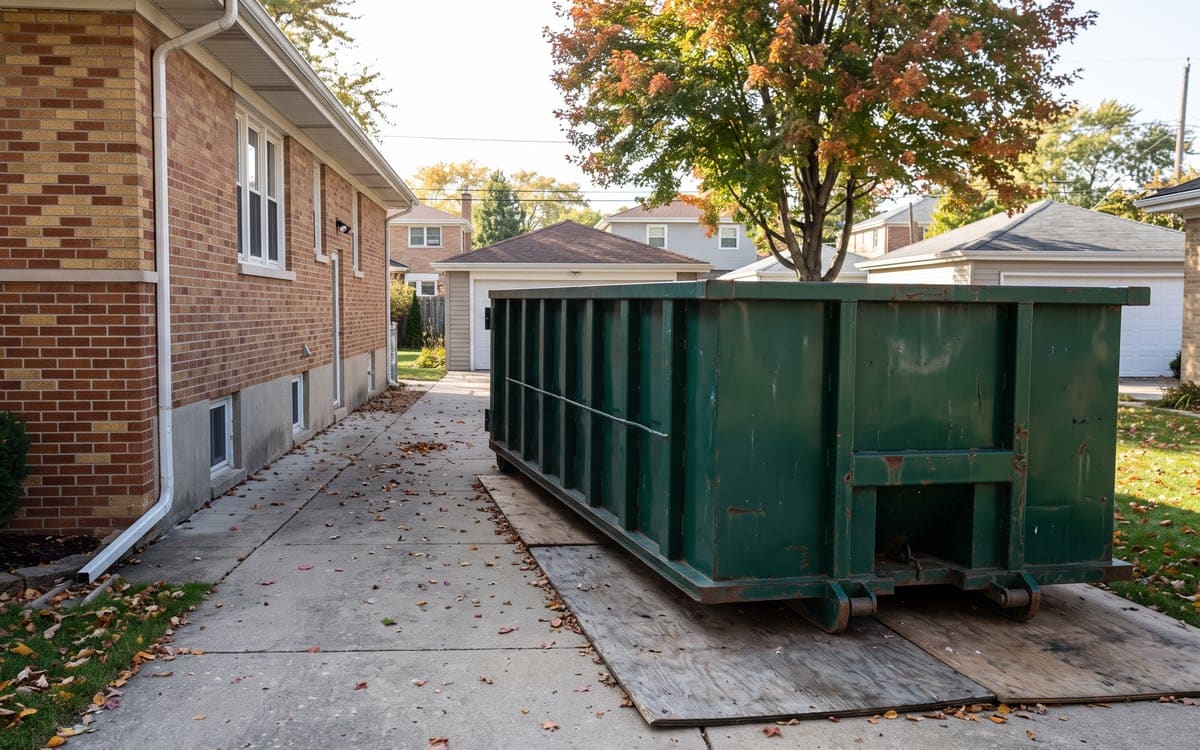
You rent a dumpster, it is dropped where the rental company can put it, and you fill it on your own time until it is picked up. The lifting, the carrying, the walking up and down stairs, the deciding what goes and what stays, all of that is yours.
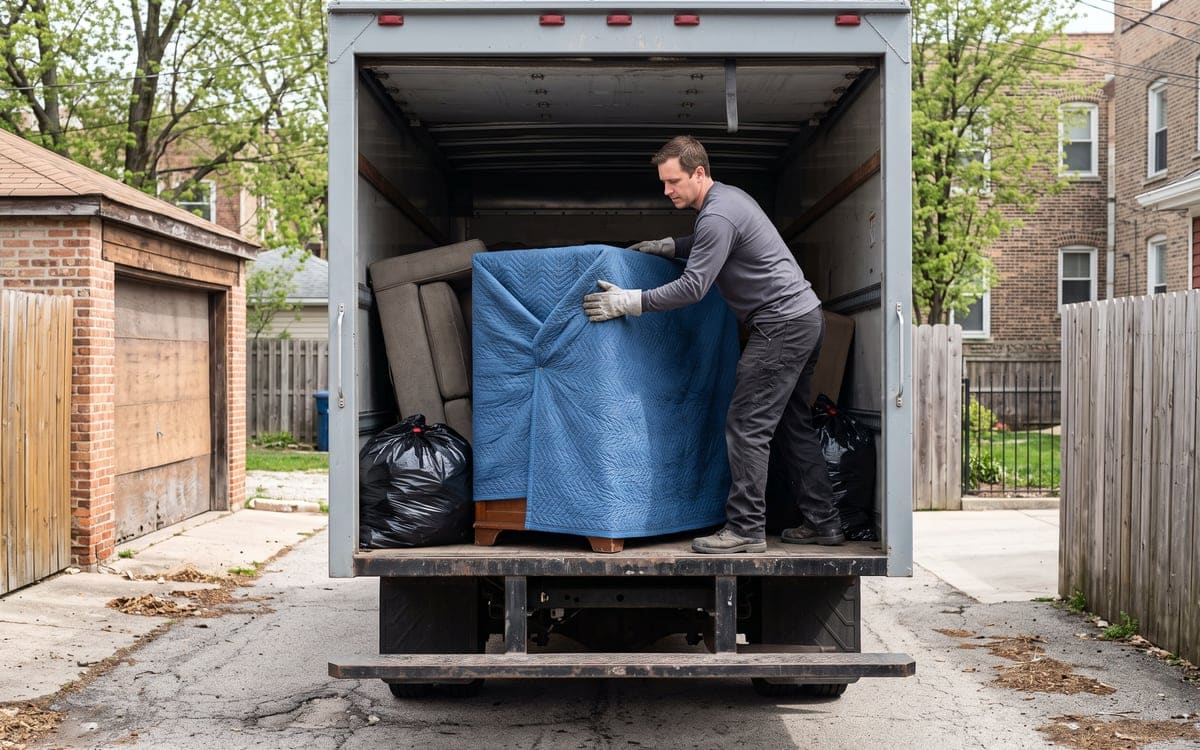
A crew works differently. The truck arrives, the workers look at the pile, and someone else does the carrying. The piece goes into the truck rather than into a container that sits on the property.
The right tool depends on whether the pile is still growing or already there.
A rented dumpster and a crew suit different jobs
The container stays in your driveway while debris builds up. The crew arrives, carries the pile out, and leaves with the truck.
A rented dumpster
You load; a rental company drops and picks up.
- Suits a long remodel where debris shows up in waves.
- Each rental company sets its own rules for where a container may sit.
- Weight limits catch loads that are heavy for their size.
A junk removal crew
You call; a hauler sends a truck and a crew to carry the load away.
- Suits a pile that already exists: a garage, a basement, a whole apartment.
- Fits a job where the carry out is too heavy or stair-bound to tackle on your own.
- No container is left on the property afterward.
When a dumpster suits a long remodel
If the junk is going to show up in waves, a dumpster is often the right tool. A kitchen tear-out over a month, a bathroom gut with new tile going in next week, or a basement being finished a weekend at a time all make debris on their own schedule, and a container in the driveway lets you drop pieces in as they come off the walls.
You can also plan around it. The container is yours until the pickup, so a Saturday with a crew of friends and a Monday with the contractor both land in the same bin. For remodel debris that keeps coming for days, the per-container price starts to look reasonable against the clock.
When a crew suits a pile that already exists
The other common case is the one where the pile is already there: a couch in the basement, a garage full to the door, or a parent's house with forty years of furniture in it. A dumpster adds a step to any of those, because you still have to carry everything from the house to the container.
A crew moves the pile straight from where it sits to the back of the truck. For a garage cleanout, a full move-out or a whole house after a parent passes, that is often the quieter choice. The number of hands is already there, and the carrying is done for you.
Stairs matter more than container size
A 10 cubic yard dumpster and a 20 cubic yard dumpster are both at the end of a long walk if your couch is on the third floor. Nothing about renting a bigger container shortens the carry down from the walk-up.
A crew is built for that carry. The floor number and the stair count come up on the call, and the carry is part of the service. If the whole job is one of stairs rather than volume, a dumpster is often the harder tool. If the stairs are short and the pile is a weekend of its own, a dumpster can still work; it is a question of where the labor sits.
Where it sits sets the limits
Where a container can go is a question for the rental company, which has its own list of what each kind of spot needs. Ask when you call to rent what the placement needs are.
A crew leaves no container on the property. The truck parks in the alley or on the street for the visit, and nothing is dropped and picked up on a separate day. That matters for buildings where the parking spot in front belongs to someone else and the back of the lot is tight.
Weight is a factor for both
A dumpster filled to the top with tile, concrete or soil may be too heavy to lift at pickup, and most rental companies set a weight limit per container. A crew with a truck has a weight limit too. Heavy debris changes what the job costs on either side.
For a short burst of heavy material, a crew is one answer. For a drawn-out demolition, where the heaviest material comes out slowly, a container that gets a weight charge once is often simpler.
The weight question is also where the plan can shift mid-project. A kitchen tear-out starts with cabinets and ends with ceramic tile and plaster, and the two halves of the pile have different weights per cubic foot. If the whole load is going in one container, think about where the lighter material sits on the floor of the dumpster and where the heavy pieces land, so the container can be lifted at the end of the week.
What stays out of either one
Paint, household chemicals, fuel, propane, solvents and batteries do not belong in a dumpster. They do not belong in a crew's truck either. Those items usually need special disposal; the paint disposal guide walks through where they go. Electronics follow their own rules. Appliances that hold refrigerant have their own rule again.
Each rental company lists what its container will not take. Those lists overlap a lot with what a crew will not haul. Read the rental company's list carefully before anything goes in the container.
Remodeling debris sits with the resident
Residents who remodel are responsible for removing discarded building materials, and dumpsters can be rented for it,1 the City of Chicago says in its sanitation code page. The responsibility sits with the resident, whether that resident loads a container in the driveway or a crew carries the pile off.
Chicago buildings pull the choice
About 57 percent of Chicago's housing is in buildings of four units or less,2 including 327,433 single-family detached homes.2 On the other end, about 20 percent of homes sit in buildings of 50 or more units,2 and the building type changes which choice fits.
A rough rule of thumb: a short remodel timeline, with debris coming out over weeks, tilts toward dumpster rental. A pile that is already there tilts toward a crew. Some jobs, including a big yard cleanup, suit either choice.
A walk-up adds a twist to the dumpster side. A container can sit in front of a two-flat with a driveway, but the carry from the apartment door down to the container is still a walk-up carry. The two tools can share a project when they fit: some residents start with a dumpster for the demolition stage and then have a crew come at the end for the furniture pieces the container cannot take.
We send a crew, not a dumpster
We do not rent dumpsters. More thoughts on loading it yourself are on their own page, with a plain look at what a resident can safely carry out and what belongs on a hauler's truck.
A dumpster rental is a container rental and a crew job is a service, so the two have different sticker prices by design. What drives a crew's price is on its own page.
Where the lawful route is spelled out
Chicago's Municipal Code 4-6-150 holds licensed junk peddlers to taking junk to a City-permitted junk facility, recycling facility, transfer station or landfill, and keeping records proving proper disposal.3 Illinois EPA also notes that a waste generator can be held responsible for the garbage if it is illegally disposed, whether or not the generator contracted with the hauler who moved it.4 The fly dumping guide covers that side.
Table: which fits the job
| Job | Dumpster rental | A crew |
|---|---|---|
| Kitchen gut over a month | Debris can go in daily | Pile piles up between visits |
| Garage full of years | You still carry each piece out | Carries straight into the truck |
| One couch on the third floor | Still a long carry down | A crew carries the piece out |
| Weekend demo with friends | Fine, if the driveway fits one | Only works if the pile is ready |
| Estate cleanout | Long rental, lots of carrying | A crew carries the whole load |
| Yard waste after a big day | Container works if space allows | Crew carries it to the truck |
| Heavy tile and concrete | Watch the weight limit | Watch the weight limit |