How we size up a carpet job
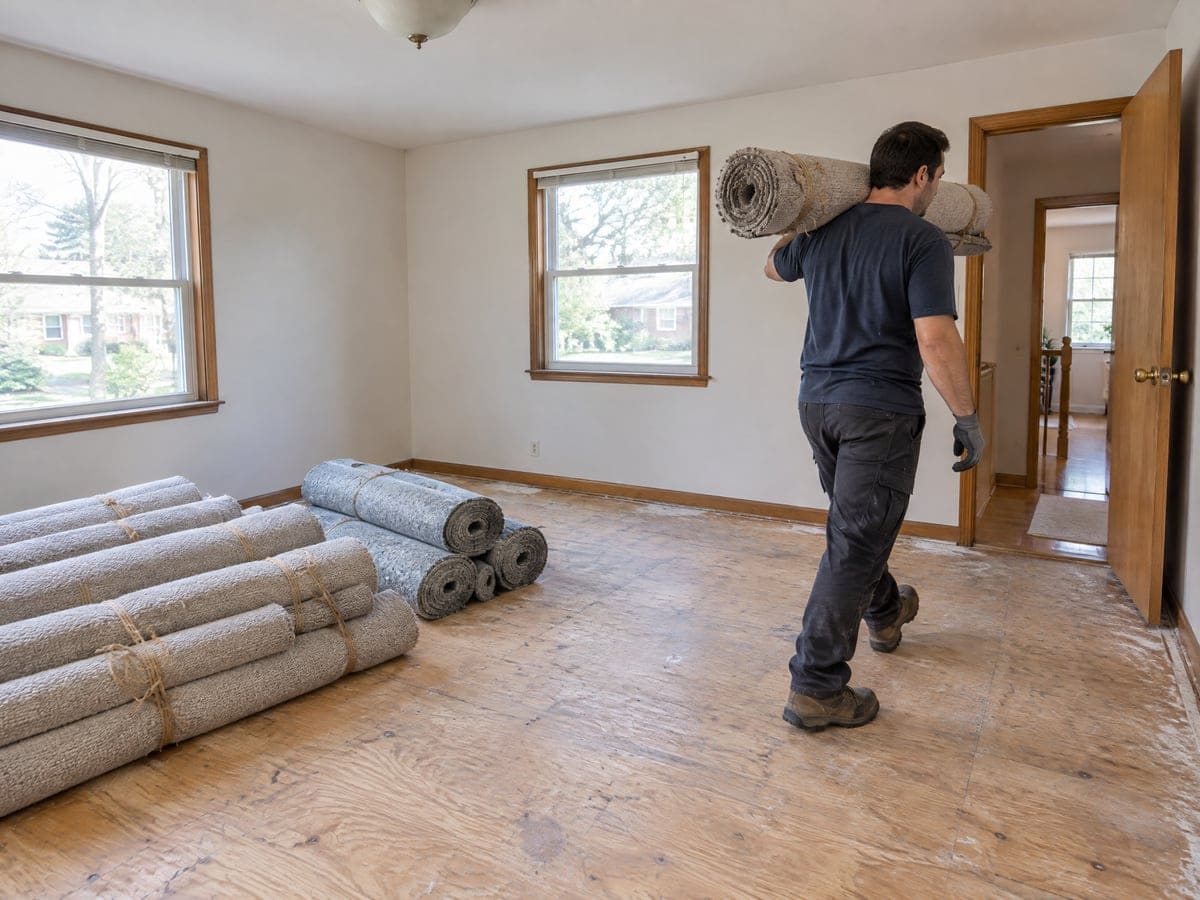
A carpet job splits two ways depending on whether the carpet is still down or already rolled. Carpet still down is the full-service job (cut, pull, roll, carry); carpet already rolled is a straight load-out.
1. Is the carpet already up, or still down
The simpler job is a carpet already pulled, rolled and tied; a crew loads it as is. When the carpet is still down the crew pulls it from the tack strip and lifts the pad underneath in its own layer. What the floor looks like once the carpet is off is a separate question and not a promise.
2. The pad, and what holds it
Pad is stapled to a wood subfloor or glued to a concrete one. Stapled pad lifts in strips with the carpet; glued pad fights back and leaves bits of foam behind. We pull what comes up by hand and cut what does not. We do not grind the glue off a slab, chase every staple with a floor stripper or promise the subfloor is ready for a specific finish. That is the next trade.
3. Tack strip and staples
Tack strip is the thin wood strip around the edge of the room with sharp nails pointing up. Staples sit along the pad line. You leave both alone; the crew pulls what has to come up for the next floor to go in and boxes it so no one steps on it. If a bare foot is in the house, we flag the room until the strip is out of the way.
4. Stair runners
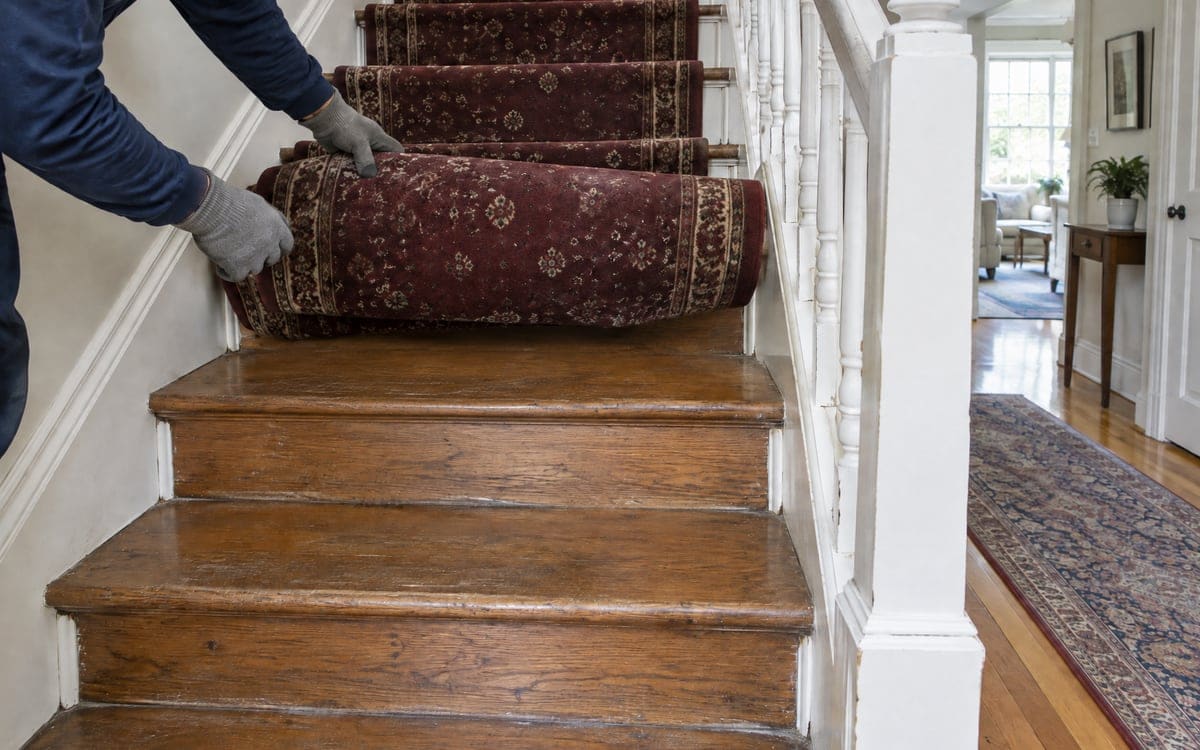
Runners staple down each tread and under each nosing. A straight run is simpler; a curved stair with pie-shaped treads is more work, because each cut lines up with the shape of the step. Say on the call how many treads, whether the stair is straight or curved, and whether the runner is still down or already pulled.
5. How much and how far
Volume is one of the drivers. Count the rooms, note the stairs, and say whether a service elevator is in play or the route goes through a back stair.
6. Area rugs
Area rugs load as they are. Worn rugs go in the main load. A rug in good shape sits apart in case it goes to reuse.
| Item or situation | What the crew checks | What to say on the call |
|---|---|---|
| Wall-to-wall carpet still down | Rooms, tack strip, pad type | Room count, and that the carpet is still down |
| Carpet already rolled | Count, length, where it sits | How many rolls, and where they sit in the home |
| Pad | Staple or glue, condition | Whether the subfloor is wood or concrete |
| Tack strip | Length of walls, nails | Whether the next floor is going in afterward |
| Stair runner | Treads, risers, curve of the stairs | Tread count, straight or curved, still down or pulled |
| Large area rug | Size, condition, where it sits | Rough size and condition |
Related jobs: the rest of a remodel coming out at the same time, the furniture that sat on it going out before the new floor goes in, a move-out where the carpet is the last thing to leave, or the bags left after the floor change is done.
What a rug has to be to go to reuse, and what rules most carpet out
Rugs sometimes worth setting apart
- Area rugs in good shape, no pet stains, no sun fade
- Oriental, wool and higher-end rugs with no visible damage
- Runners that are not glued, with their edges intact
- Rugs that came out of a staged home and never saw use
Carpet that goes
- Wall-to-wall carpet of any age
- Pad that has been down for years; it holds moisture and smells
- Rugs with pet stains, cat damage, water lines or sun fade
- Shag or oddly sized pieces someone cut out of a bigger carpet
The crew flags a rug worth setting apart at the door. We make no promise about where a load ends up; what to ask any hauler is in the guide to hiring a junk removal company.
What our crew handles on a carpet job
The crew pulls the carpet off the tack strip, lifts the pad, takes up tack strip where it has to come out, boxes the sharp pieces and loads the rolls on the truck. We do not refinish floors or repair the subfloor, and what the floor looks like once the carpet is off is up to the next trade.
The next floor goes down with a different trade. Carpet removal clears the room; the installer who sets the next floor takes it from there. On the call, say what is coming next (hardwood refinishing, new engineered flooring, luxury vinyl tile, polished concrete).