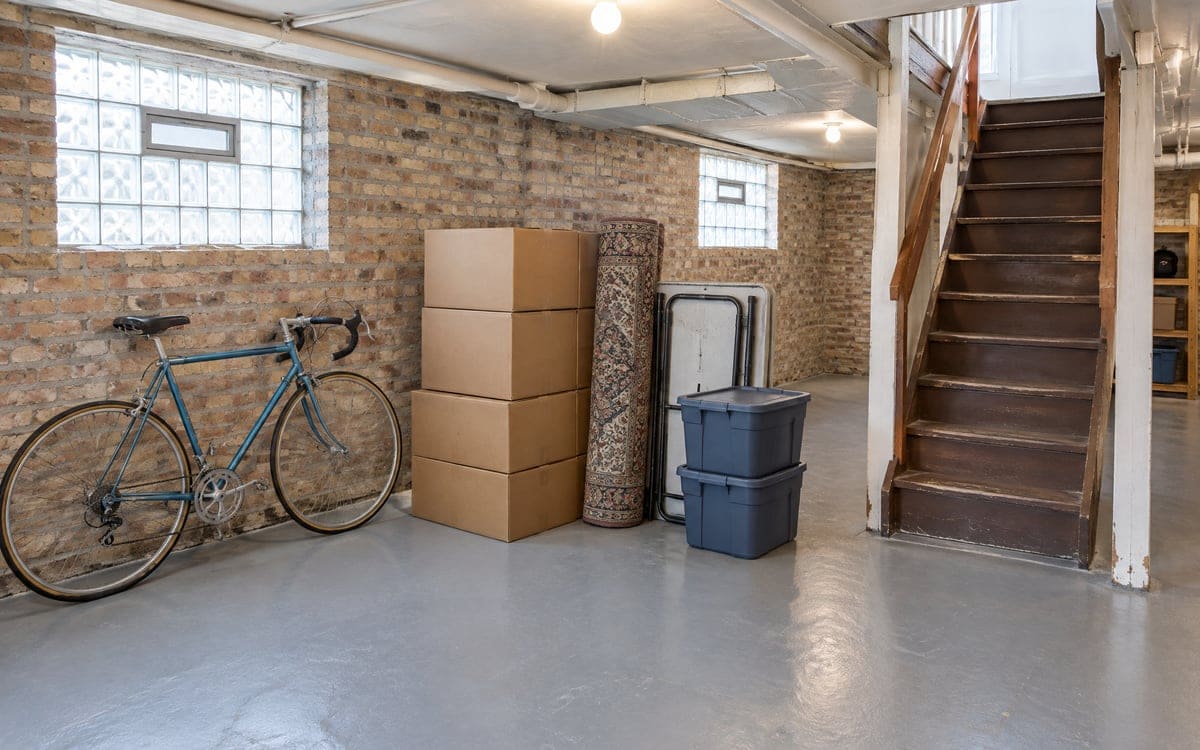
What is in the garage, basement or attic
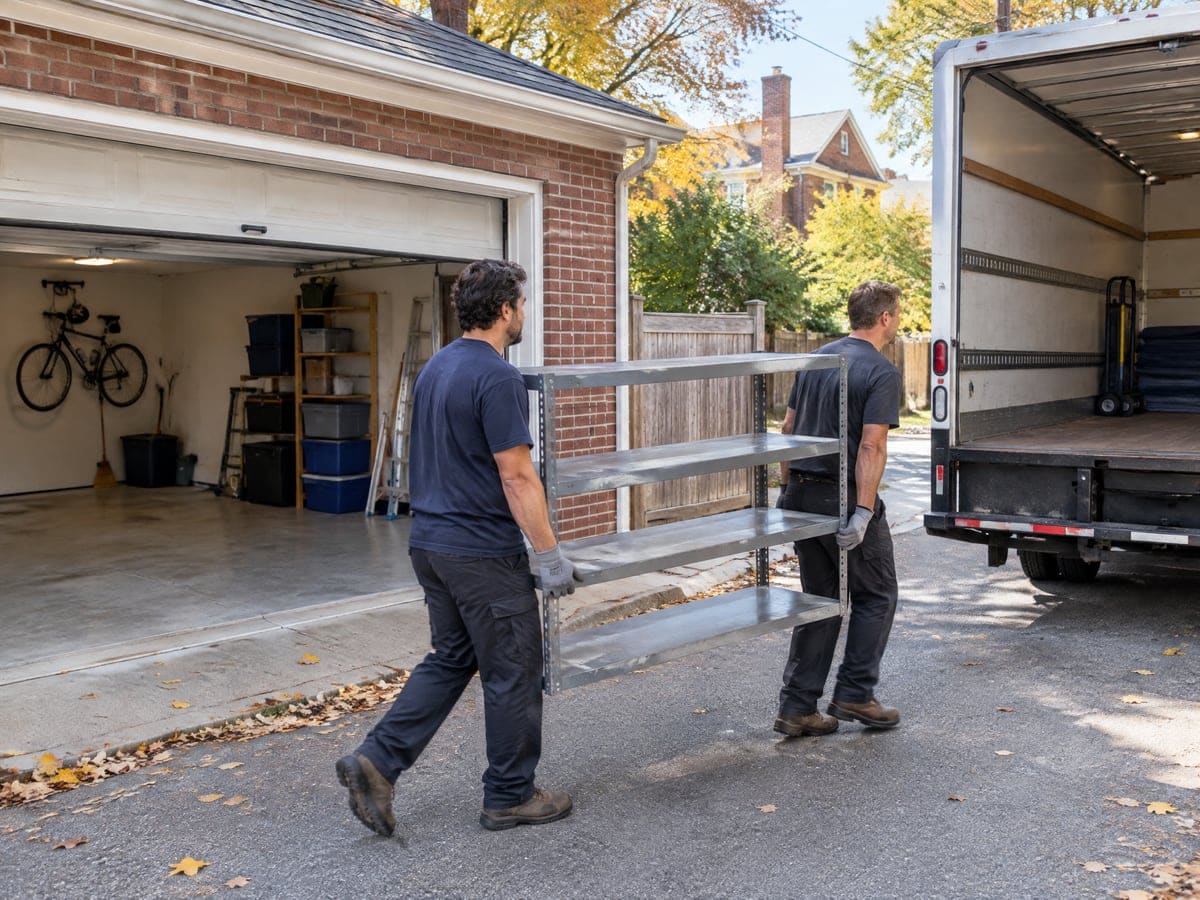
Every garage or basement cleanout starts with a short walk-through. The crew asks what stays, what cannot ride on a junk truck, and how the room is set up.
1. What is in there and what stays
Mark anything that stays with a piece of tape, a sticker or a short written list for the crew. Do not drag heavy pieces around to pre-sort; the crew moves the piles. Everything that is not marked is up for the sort.
2. What cannot go on a junk truck
Paint, household chemicals, fuel, propane, solvents and car batteries do not ride on the truck. A Chicago resident can take most of them to the City's Household Chemicals and Computer Recycling Facility,1 which accepts household chemicals like bleach, harsh cleaners and drain cleaners along with oil-based paints, solvents, CFL bulbs, batteries, aerosol cans and mercury items. The facility is for Chicagoans' own household materials, so the crew cannot drop a customer's load there on your behalf. Latex paint is not accepted at the facility either; the City's page suggests drying it with kitty litter, shredded paper or sawdust and throwing the dried paint and can away. Check the City's page before going.
3. Basements
A basement can mean narrow stairs, low beams and a boiler room with pipes to work around. Chicago averages 37.86 inches of precipitation a year, with May and August the wettest months.2 If any boxes in the basement are water-damaged, say so on the call so the crew can plan for them.
4. Attics
An attic may have a pull-down ladder or a narrow set of stairs by the back bedroom. The crew handles the attic end to end; nobody in the family climbs the ladder with a load. Insulation on the attic floor means stepping on joists only, which is crew work. Furniture that will not fit the ladder opening comes apart in the attic, and smaller boxes come out before anything heavy.
5. Detached garages on the alley
A detached garage on the alley opens straight onto the truck, so nothing has to go through the house. Attached garages open to the side yard or the back porch, and the carry runs there. The crew does not promise where a truck can stop; alleys and street parking have their own rules on the day.
6. Shelving and workbenches fixed to the wall
Metal shelving, pegboards, a bench bolted into the wall or into the floor: all come down, with the fasteners pulled first. Do not try to lift a wall-mounted shelf alone. Tell us on the call if the garage has built-ins or a workbench that stays, so the crew knows where the sort ends.
| Item or situation | What the crew checks | What to say on the call |
|---|---|---|
| Detached garage on the alley | Alley access, door opening, pile depth | That the garage is detached, and roughly how full it is |
| Unfinished basement | Stairs, boxes near the floor, water-damaged piles | That it is an unfinished basement, and whether any boxes are water-damaged |
| Attic with a pull-down ladder | Opening width, joist spacing, insulation | That the access is a pull-down ladder, and whether furniture is up there |
| Metal shelving | Fasteners, condition, weight | How many wall shelves are in the garage |
| Workbench | Bolts into floor or wall, size | Whether the bench stays or goes, and whether it is bolted down |
| Paint cans and chemicals | Residue in each can, type of paint | That the shelves hold paint, chemicals or fuel |
Where an old freezer in the garage is part of the sort, we handle it as an appliance alongside the rest. Where old electronics in the basement are mixed in, the TV removal page covers how those pieces are handled. If a shed goes with the garage, the shed is a separate planned job. A whole house cleanout covers the case where the garage, the basement and every room above are the full scope.
A few things on the shelf never ride on the truck.
Pieces worth passing on, pieces that go
Reuse is possible for some pieces that come out of a garage or basement.
Pieces that may still have a next home
- Working hand tools, power tools and ladders.
- Bikes with intact frames and wheels, even if they need a tune-up.
- Camping gear in good shape.
- Clean metal shelving that comes down in one piece.
Pieces that go as disposal
- Rusted tools, broken-handled rakes and shovels.
- Bikes with bent frames or missing drive trains.
- Cardboard and old paper piles.
- Water-damaged boxes.
- Cans with any paint or chemical still inside.
Reuse here means neighbors, a tool library, or a reuse group that accepts hard goods. What reuse groups usually take runs through the common lines. If a basement is big enough that it is really a whole-house job, a crew or a dumpster is the right page to read first.
What our crew does
The crew carries boxes, bikes and loose piles out of the garage, basement or attic, brings shelving and workbenches down from the walls, and loads the truck. Chemicals, paint and anything on the "do not take" list stay behind.