
Household batteries come in a few main types
The alkaline AAs, AAAs and 9-volts most households keep in bulk for smoke alarms, flashlights and remote controls can leak potassium hydroxide as they corrode. Behind watch backs and key fobs, in greeting cards and inside the rechargeable packs from drills, laptops, e-bikes and hoverboards, the chemistry is lithium; coin cells and larger lithium-ion packs can short against metal and start a fire that is not easy to put out. Lead-acid comes from a car, a lawn tractor or a motorcycle and holds sulfuric acid and lead.
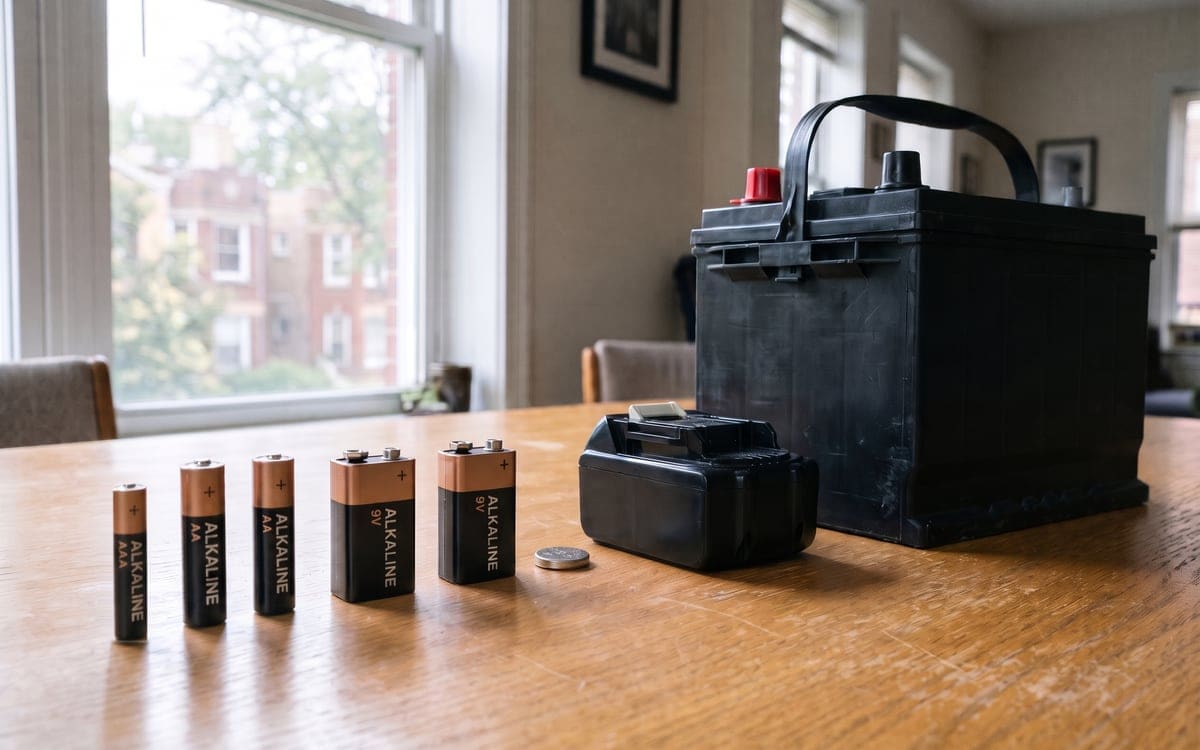
Lead-acid batteries have their own return route
Illinois EPA says lead-acid motor vehicle batteries were banned from Illinois landfills on September 1, 1990.1 The counter where you buy the next one is the usual stop. Illinois EPA says retailers must accept the old battery in exchange for a new one.1 A parts store, a big-box auto chain or a service station that sells the replacement is required to take the old one back. For a dead battery you are not replacing, Illinois EPA notes that lead-acid batteries are not commonly accepted during household hazardous waste collections, and local retailers are willing to accept them.2
A crew clearing out a garage, a shed or an estate will set a lead-acid battery aside and point you to the retailer route. The battery is not a load the truck takes to a landfill, and it is not a load for the alley.
Lithium rechargeables and fire risk
The rechargeable packs in a cordless drill, a hoverboard, a vape, an e-bike or a laptop are lithium-ion. The hazard a trash truck runs into is a pack that gets crushed, punctured or shorted during the ride, which can start a fire inside the load.
Illinois EPA lists batteries among four categories of universal waste, with pesticides, thermostats and fluorescent and high intensity discharge light bulbs.1 Even in small quantities, Illinois EPA says, these wastes are a potential threat to the environment if they are not managed properly. Illinois EPA also notes that the universal waste management standards are not applicable to household generated wastes.
Keep a lithium pack cool and dry while it waits for a drop-off, and never open or puncture the pack. If a pack is swollen, warm or hissing, do not pick it up or carry it.
Alkaline AAs, AAAs and 9-volts
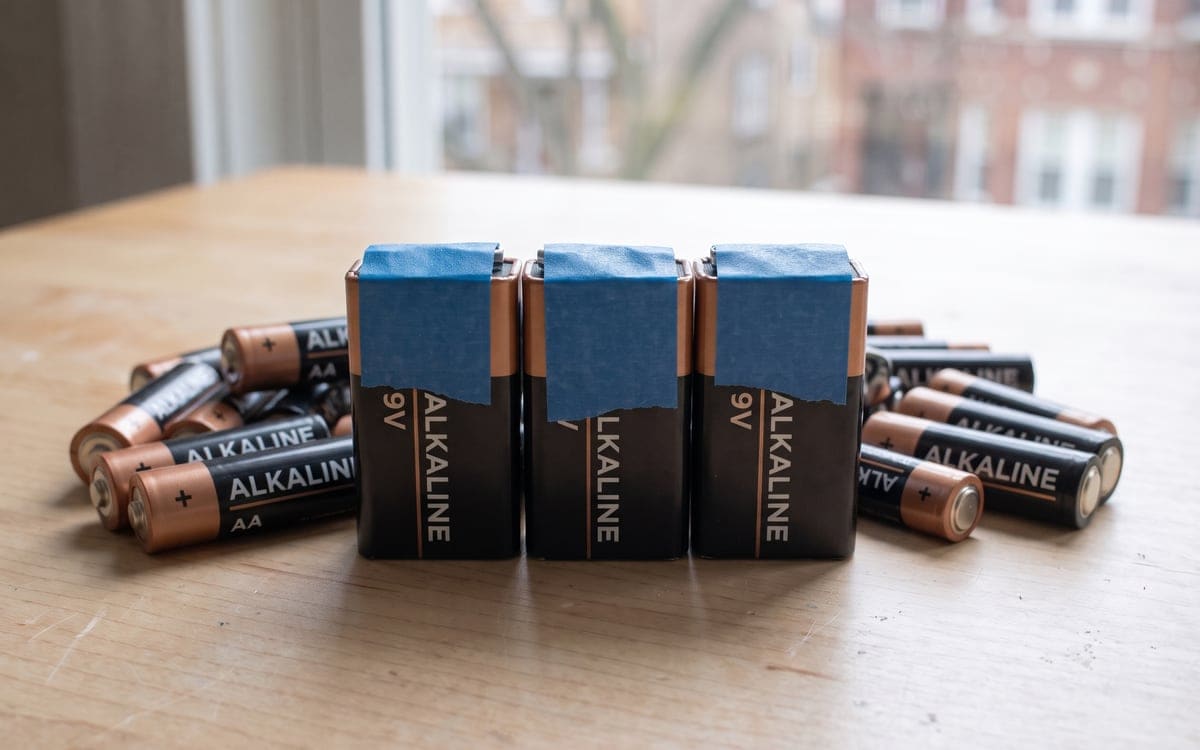
Alkaline cells are what most households have in bulk. The City's household chemicals facility lists alkaline batteries under its Not Accepted materials,3 which means the drop-off at 1150 N. North Branch is not the route for a drawer of alkaline AAs, AAAs or 9-volts. A household 9-volt is usually alkaline as well, so a dead 9-volt from a smoke detector follows the same rule. Manufacturers' guidance for current alkaline cells varies. The reason to keep a leaking cell separate is corrosion, which worsens the longer the cell sits in a drawer after it has died.
Coin cells and lithium-ion packs
The small round batteries behind a watch back, in a car key fob, in a bathroom scale or in a greeting card are usually lithium coin cells. They are the hazard a child can swallow, and the hazard that can start a fire in a trash can by shorting against metal. Put a strip of painter's tape or electrical tape across each coin cell before it leaves the drawer.
The City's household chemicals facility lists compact fluorescent light bulbs and tubes, batteries (rechargeable, car, small lead-acid, lithium), and other household chemicals among its accepted materials.3 Lithium coin cells and lithium-ion rechargeable packs go to this facility under the "lithium batteries" line.
The City's facility is for residents, not businesses
The drop-off at 1150 N. North Branch Street is open to Chicagoans with household materials.3 The City says businesses and large groups must work with a private disposal company.3 During a cleanout a crew sets batteries aside the same way it sets aside paint and chemicals; the resident drives the household materials over themselves. Hours at the facility shift and have carried a repair notice; check the City's own page before you pack the car.
The City facility's not-accepted list
Not everything that looks like a chemicals-facility item is on the accepted list. The City says the facility does not accept business waste, alkaline batteries, latex paint, smoke or carbon monoxide detectors, household appliances, refrigerants, air conditioners, tires, large or business copy machines or pharmaceuticals,3 among other items. Smoke detectors are on the Not Accepted list; the detector itself needs a different route.
What a crew does with batteries during a cleanout
A junk removal crew clearing a basement, a garage or a whole unit will find batteries in the odd places batteries live: inside a wall clock, inside a smoke detector, inside a toy that has sat on a shelf, in a kitchen drawer. Loose batteries do not ride on the truck to a landfill; the crew sets batteries aside for the resident.
Leaking cells stay apart from the rest of the pile so the corrosion is contained. The appliance shell rides out with the other cleanout items, like tools and shelves of boxed junk or a full unit after a move-out. Household chemicals, paint and loose chemical containers are their own trip and are not on the truck.
Batteries by type
| What you have | Where it can go | What to do first |
|---|---|---|
| Dead AAs or AAAs | Not at the City facility; manufacturers' guidance varies | Keep leaking cells in a separate plastic container |
| Alkaline 9-volt | Not at the City facility (alkaline is on the Not Accepted list); manufacturers' guidance varies | Tape across both terminals before any travel |
| Lithium coin or button cell | City chemicals facility, residents only (lithium batteries, Accepted list) | Tape top and bottom of each cell before carrying |
| Lithium-ion drill or e-bike pack | City chemicals facility, residents only (lithium batteries, Accepted list) | Keep cool and dry; never puncture or open the pack |
| Car or tractor battery | The retailer selling the replacement | Carry upright; the counter will trade or take it |
| Smoke detector with a backup 9-volt | A 9-volt is usually alkaline (Not Accepted); a lithium 9-volt follows the lithium row | The detector itself is on the Not Accepted list |
| Swollen or damaged lithium pack | Keep cool and dry; never crush, puncture or open | Do not pick up or carry a warm or hissing pack |
| A mixed box from a cleanout | Sort first: alkalines are on the Not Accepted list; the rest go to the facility | Pull alkaline AAs, AAAs and 9-volts out of the box before any trip |